The short answer
Where a commercial coating specification requires dry-film-thickness verification, agree the measurement and reporting scope before work starts. Ask the responsible inspector to connect the results to the specified coating, substrate, locations and acceptance criteria. A coat count or a photograph of one gauge reading cannot replace that report.
Name the requirement before buying the inspection
For a Saskatoon commercial coating project, ask the specifier whether thickness verification is required and what it must establish. Identify the surface, the proposed system and whether the requirement concerns one layer or the complete coating. Keep wet-film application checks and dry-film acceptance clearly identified in the requested documents.
Write down who supplies the inspection, who reviews the results and what is included in the price. Ask for the referenced document and applicable revision rather than adding a remembered thickness figure to the quotation. Do not invent a universal minimum, maximum or sampling frequency. If the contract has no agreed requirement, resolve that gap before treating a later reading as a pass or failure.
Match the evidence to the substrate and area
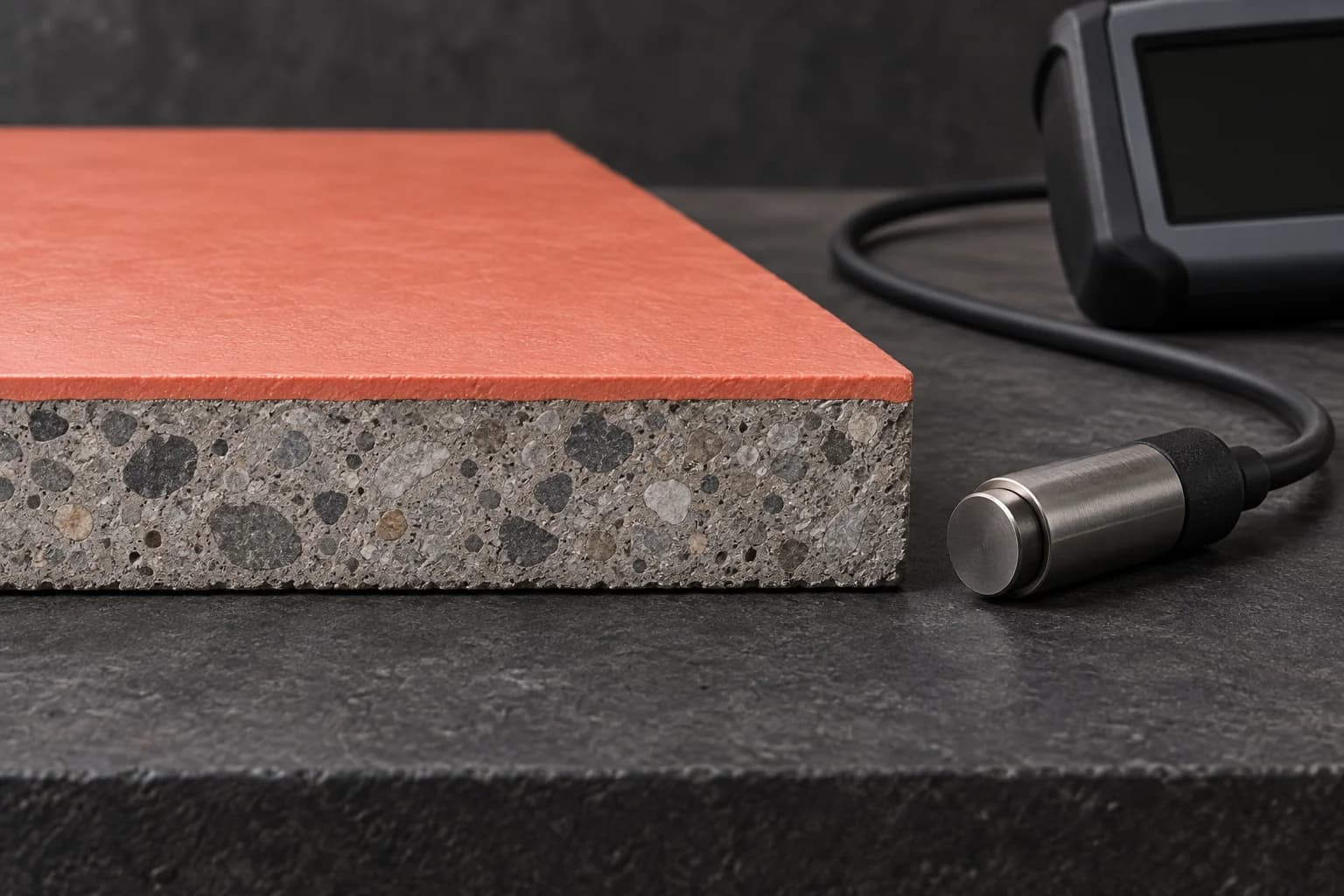
DeFelsko's PA9 guidance concerns thickness evaluation on nonmetal substrates, including concrete, and explains why a single reading cannot usually characterize a large area. Its instrument feature uses specified acceptance parameters and supports, rather than replaces, the applicable standard. This is manufacturer guidance about evidence collection, not an inspection procedure or project certification.
Ask the inspector to explain the proposed measurement method and its suitability for this coating and substrate. Request a location map and an explanation of which areas the report represents. If an existing finish remains underneath, ask how the result will distinguish or account for those layers. Leave equipment selection, verification and interpretation to the qualified reviewer rather than directing staff to reproduce an instrument demonstration.
Reference: DeFelsko: PosiTector 200 PA9 reporting and limitations
Read the report beyond its summary result
Request the underlying measurements, location references, units, coating identification and the criteria used for the conclusion. Ask the reviewer to identify missing or inaccessible areas and explain how any reported exceptions affect acceptance. A summary should lead back to inspectable evidence; it should not replace the record it summarizes.
Consider an illustrative report covering an open floor area but omitting the strip beneath equipment. Record the strip as unassessed and ask what further evidence the agreed inspection scope requires. Do not quietly copy the open area's conclusion onto it. Similarly, ask for an explanation of an unusual result before assuming that another coat is the correct remedy. The example states no numerical tolerance or actual project finding.
Resolve exceptions without changing the target afterward
Keep the original report when a correction or further assessment is proposed. Ask for the affected area, technical rationale, revised work scope and required review after that work. If the specification itself changes, record the authorized revision separately; changing a target should not silently turn the original evidence into a compliant result.
Close the thickness question with the responsible reviewer's documented conclusion and any remaining restrictions. Keep appearance, adhesion, chemical suitability and return to use as separate acceptance matters. Thickness evidence alone cannot settle them. Bring inspection responsibilities into an industrial coating scope discussion; this guide does not claim certified inspection services, instrument ownership or a particular specialist installation capability for PainterzRus.
Keep this for your project
Your planning checklist
- Identify the specified layer or system and applicable requirement.
- Agree inspection responsibility, method and represented areas.
- Obtain location-linked measurements and acceptance criteria.
- Document unassessed areas and exceptions explicitly.
- Retain original and follow-up evidence with the final review.
Does the specified number of coats prove the required dry thickness?
Not by itself. Where thickness verification is required, obtain the agreed measurement evidence and its interpretation against the specification. Coat count and appearance remain different records.
Put the planning into practice
Download the free quote comparison kit to compare the work behind each price, or build your commercial project brief before requesting an estimate. No email required to use either tool.
Discuss your commercial project
For warehouse or light-industrial work, explore the access, surface-condition and downtime questions covered by our industrial and warehouse coating planning service.
Have a location and a rough scope? Request a commercial painting quote with the details you have. Access, timing and project requirements can then be reviewed for your property.
A planning guide from PainterzRus, a commercial painting business in Saskatoon. Not a site-specific coating specification, safety assessment or price quotation. Confirm requirements for your property before work begins.