The short answer
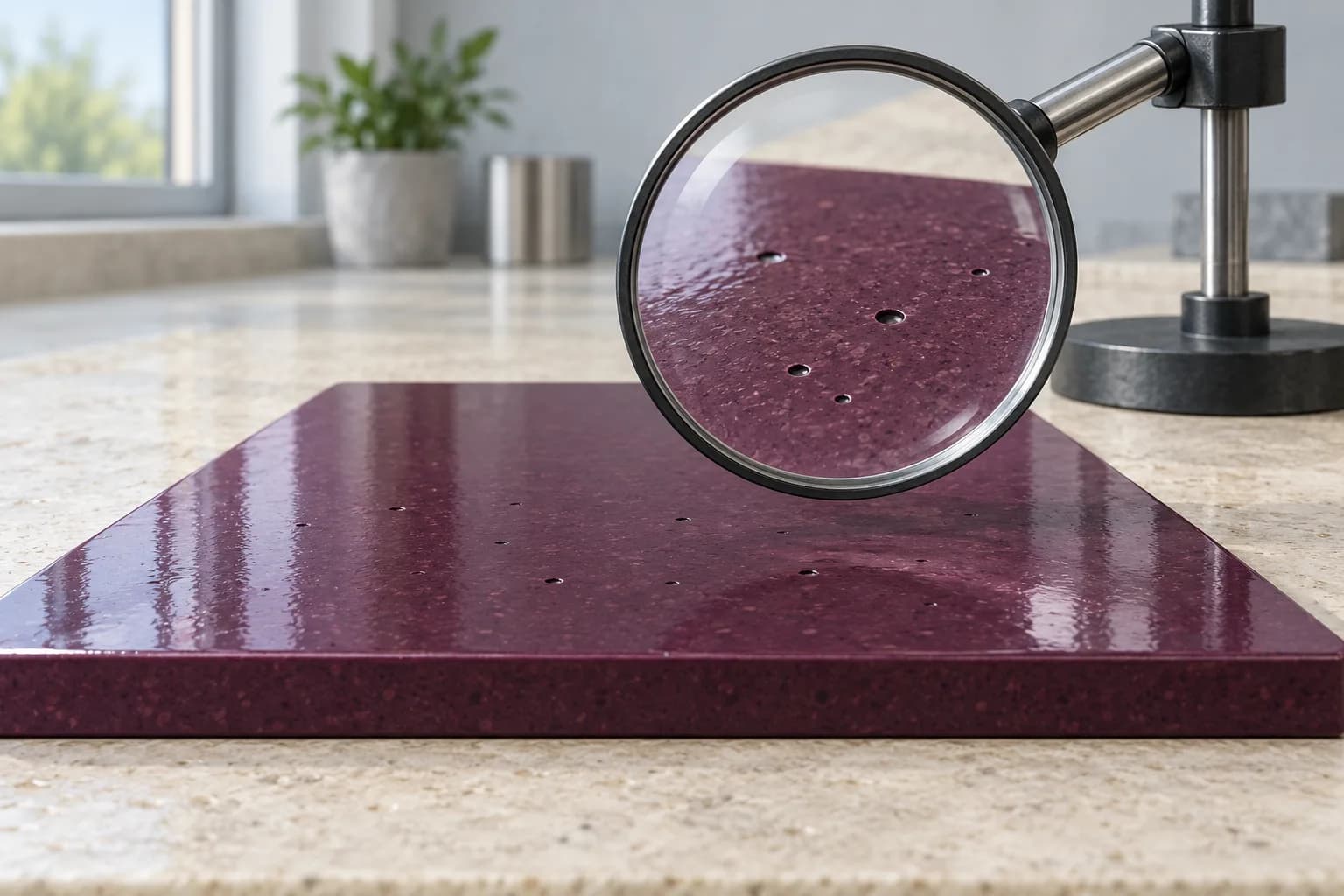
When small pits appear in a newly coated commercial floor, record their distribution and ask the installer to assess their depth, cause and significance for the specified system. Hold acceptance of the affected area until that review is resolved. Neither a close-up photograph nor the word pinhole establishes whether the finish meets its intended purpose.
Map the observation before naming its cause
Start with a floor plan identifying the affected bays or rooms. Photograph an overall view and representative details without opening the pits or damaging the finish. Record whether they are isolated, clustered or spread throughout the area, and whether the observation was made before normal use began. Keep unknowns visible rather than assigning every depression to one mechanism.
Ask the installer to distinguish the reported pits from the intended surface texture, debris impressions or another defect. Agree who can assess whether they extend through a relevant layer. An owner should not improvise probing, electrical testing or chemical exposure. The useful first output is a bounded observation record that a qualified reviewer can connect to the installed system.
Request the relevant installation evidence
Sika's US Sikafloor-264 data sheet warns that application during rising ambient and substrate temperatures can produce pinholes. This is a product-specific example of why condition records matter, not a diagnosis of every pitted floor or a Canadian specification. Ask for the current Canadian documents governing the actual products installed.
Collect the preparation and priming records, application sequence and available temperature history for the affected area. Invite the installer or supplier to explain which evidence supports its proposed cause. Keep the original moisture assessment in the package, but do not assume that a pre-installation moisture result alone resolves a later surface defect. Different records answer different questions.
Reference: Sika: Sikafloor-264 product data, application limitations
Connect the finding to the purchased function
Tell the reviewer what the approved floor system was intended to do in that location. An appearance concern and an unresolved question about coating continuity should be recorded separately. Ask whether further examination is needed and which project requirement will govern the decision. This guide establishes no acceptable number of pits, inspection voltage, test method or universal rejection rule.
Request a written outcome for each affected zone: accepted with a stated basis, held for further assessment or proposed for correction. If the answer only says that the marks are cosmetic, ask what supports that conclusion for the agreed use. Likewise, do not infer that an entire floor must be removed from a photograph of one small depression.
Review the repair proposal before reopening the area
In an illustrative service-room project, one bay could remain under review while another has no reported pits. A corrective proposal should identify its limits, compatible materials, preparation responsibilities and the review needed after repair. Ask the supplier how the proposed work addresses the assessed cause. Adding another layer without that explanation may leave the acceptance question unanswered.
Agree the actual access and return-to-use arrangements with the responsible parties after the repair scope is known. Retain the assessment, approved revision and closing inspection record together. Confirm any specialist inspection or installation service separately when discussing commercial coating work with PainterzRus. No test capability, guaranteed outcome, reopening time or project-specific product recommendation is claimed here.
Keep this for your project
Your planning checklist
- Map the pits and preserve overall and detail photographs.
- Identify the installed system and applicable Canadian product documents.
- Collect preparation, priming and application-condition records.
- Obtain a decision tied to the specified floor function.
- Approve any bounded repair and its closing review before acceptance.
Does a floor moisture pass prove that visible pinholes are harmless?
No. The earlier report addresses a different decision. Have the responsible reviewer assess the observed pits against the installed system and intended use, then document whether acceptance, further assessment or correction is appropriate.
Put the planning into practice
Download the free quote comparison kit to compare the work behind each price, or build your commercial project brief before requesting an estimate. No email required to use either tool.
Discuss your commercial project
For warehouse or light-industrial work, explore the access, surface-condition and downtime questions covered by our industrial and warehouse coating planning service.
Have a location and a rough scope? Request a commercial painting quote with the details you have. Access, timing and project requirements can then be reviewed for your property.
A planning guide from PainterzRus, a commercial painting business in Saskatoon. Not a site-specific coating specification, safety assessment or price quotation. Confirm requirements for your property before work begins.