The short answer
Before commissioning pull-off tests on a coated commercial concrete floor, agree the decision, reviewer and test-site repair responsibility. Request fracture records alongside measured strength; the number alone does not explain which part separated.
Define the question before booking the test
For a Saskatoon commercial owner, a testing allowance should identify the decision being purchased. Are you checking an installed trial before extending the work, investigating disputed performance or satisfying a specified acceptance requirement? Write that question into the request. Ask the responsible specifier or inspector to select the appropriate method and explain what the proposed evidence can resolve.
ASTM's public D7234-22 overview addresses pull-off strength of coatings on concrete. It identifies the test as destructive and notes that spot repairs may be needed. That makes permission to test and responsibility for reinstatement part of the purchasing discussion. The overview does not establish a passing value for your floor or replace the full method used by a qualified tester.
Reference: ASTM D7234-22: public scope, particularly clauses 1.1 and 1.4
Make the testing appointment and repair allowance fit together
Ask for a marked plan identifying proposed test locations and the areas they are intended to represent. Have the inspector explain the sampling rationale and any exclusions. Agree access, protection of nearby operations and the person authorized to release each location. Leave test execution and site controls to the responsible specialists; this guide is a buyer brief, not a field procedure.
ASTM notes that instruments and loading fixtures can influence results and recommends agreement on them. It also points to the coating manufacturer for the minimum cure period before testing. Request those choices in the proposal. Then ask who supplies compatible repairs, what appearance reference applies and who determines when the repaired locations can return to their intended use.
Compare testing quotations with those responsibilities visible. One proposal may include reporting only, while another includes a return visit and repairs. Ask each provider to identify exclusions and the basis for additional visits. Confirm who coordinates the installer if the testing provider does not undertake coating repairs. Resolve that gap before booking access.
Reference: ASTM D7234-22: public significance and use, clauses 5.2 and 5.3
Read where the test separated, not only the strength
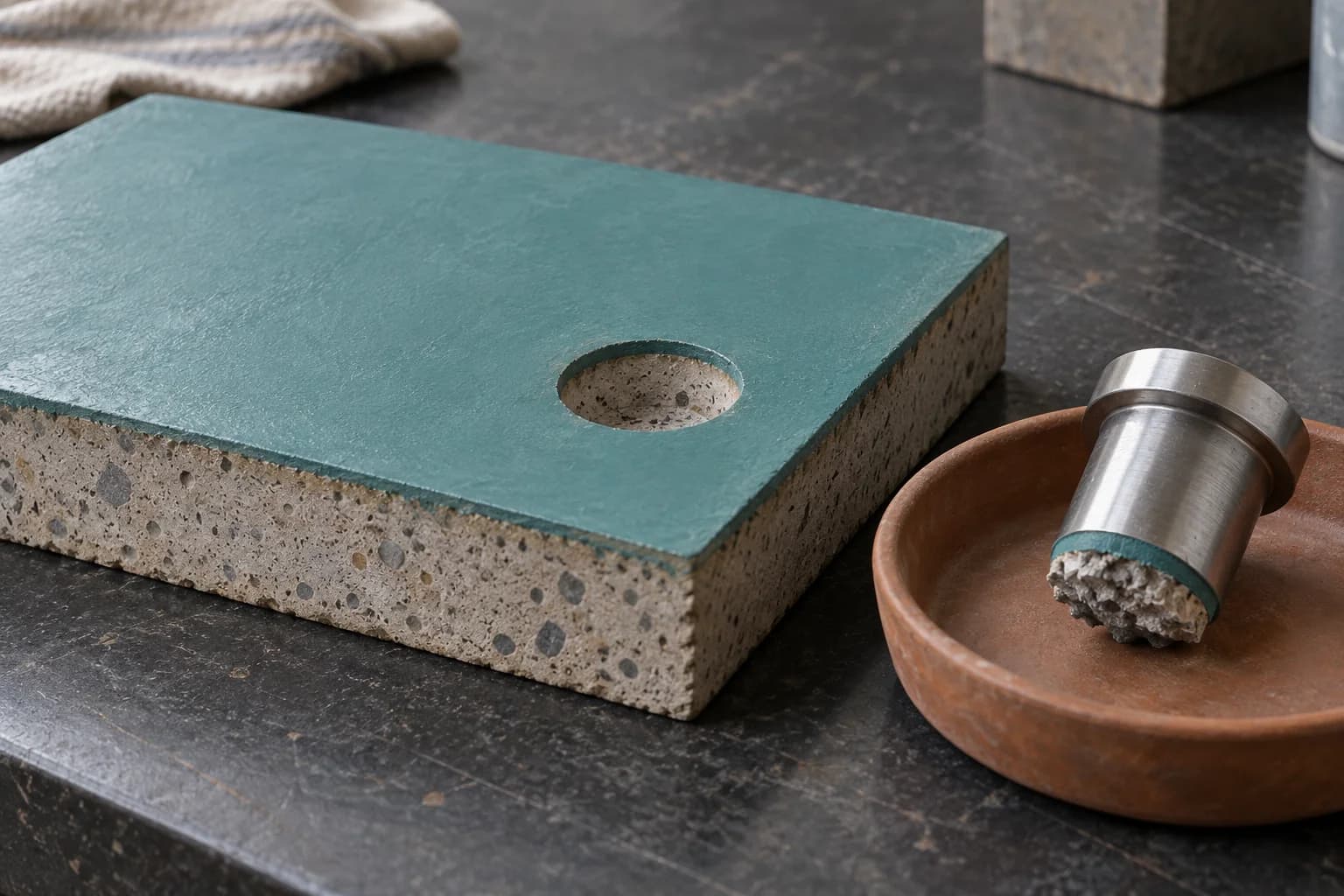
DeFelsko explains that pull-off separation exposes the weakest plane within the test assembly. Its guidance distinguishes separation within a coating, between layers and involving the test adhesive. These are different observations. Ask the inspector to connect each measured result to its fracture description and photographs, and explain how that combination affects interpretation against the agreed requirement.
For an illustrative warehouse trial, a report might record a separation involving the adhesive used to attach the test fixture. Ask the reviewer what that result establishes and whether another assessment is needed. Do not relabel it as demonstrated coating failure or silently discard it. Preserve the original observation and the reviewer's reason for any repeat test or additional investigation.
Close the evidence decision and the physical test sites
Request a conclusion tied to the original question: accept the represented work, obtain further evidence or review a corrective proposal. Keep untested areas and unresolved results visible. If a repair to the coating system is proposed, distinguish that corrective work from the small repairs caused by testing itself. The two scopes can have different reasons, responsibilities and review requirements.
Give every test site a location identifier that appears in both the report and the repair record. This lets the owner check that a technically resolved result has not left an overlooked opening behind stored materials. Ask the reviewer to record any agreed limitation on the repaired area's appearance or use.
Retain the report, location plan, decision and reinstatement record together. Confirm that test sites receive their agreed closing review before treating the assignment as complete. Bring this inspection brief into an industrial coating discussion with PainterzRus and confirm the services offered. Testing appointments, specialist interpretation and repair arrangements need explicit scope; this guide makes no claim of in-house inspection capability or a guaranteed floor outcome.
Keep this for your project
Your planning checklist
- State the acceptance or investigation decision the test must support.
- Agree the method, test locations, timing and responsible reviewer.
- Assign permission, access and test-site reinstatement before testing.
- Request fracture descriptions and photographs with measured results.
- Close both the technical decision and the agreed repairs.
Does a high pull-off result automatically accept the whole floor?
No. Have the reviewer interpret strength and fracture against the requirement and sampling scope. Record represented areas and unresolved findings.
Put the planning into practice
Download the free quote comparison kit to compare the work behind each price, or build your commercial project brief before requesting an estimate. No email required to use either tool.
Discuss your commercial project
For warehouse or light-industrial work, explore the access, surface-condition and downtime questions covered by our industrial and warehouse coating planning service.
Have a location and a rough scope? Request a commercial painting quote with the details you have. Access, timing and project requirements can then be reviewed for your property.
A planning guide from PainterzRus, a commercial painting business in Saskatoon. Not a site-specific coating specification, safety assessment or price quotation. Confirm requirements for your property before work begins.