The short answer
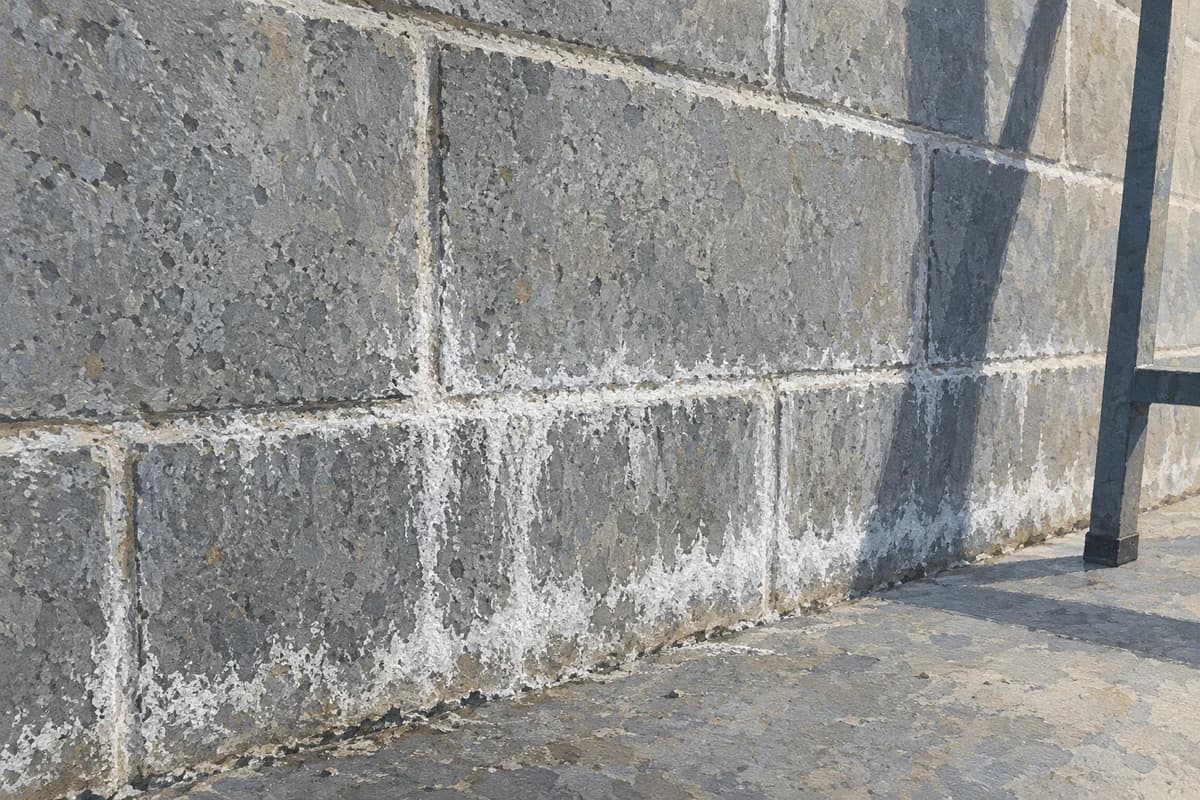
White deposits on masonry need identification before a coating is selected. If they are efflorescence, the issue involves moisture moving salts to the surface; painting over the visible deposit is not a complete preparation plan. Ask the building team and contractor to establish the cause, necessary repairs and the substrate conditions required by the proposed system.
Record the pattern rather than naming the defect
At a warehouse or commercial unit, photograph the deposit and its relationship to mortar joints, ground level, openings and adjacent surfaces. Note whether the area changes after wet weather or cleaning. Describe what is visible: white powder, crust, patchiness or loose paint. A photograph alone does not prove which material or mechanism is involved.
Behr describes efflorescence as salt-like deposits associated with moisture moving through masonry or stucco. Its professional guidance addresses the moisture source when excess moisture is responsible. Use that information to request a proper assessment, not to diagnose every white mark as the same problem.
Reference: Behr Canada: efflorescence and mottling
Make the coating decision conditional on findings
Ask who will investigate moisture pathways and who will confirm any building repairs. The coating contractor should then explain the preparation and compatibility requirements for the actual masonry and existing finish. Keep assessment, remedial building work and decorative work as separate decisions so one does not silently stand in for another.
A useful written question is: what evidence would make you delay coating this wall? Ask for product-specific limits and any proposed testing, without substituting a generic moisture number from another project. If the cause is unresolved, record the coating as held. A thicker finish or a waterproof label is not an automatic answer for an unassessed wall assembly.
Compare proposals on readiness, not just coverage
Behr's guidance includes removing deposits and loose material as part of preparation. The appropriate method depends on the substrate, existing coatings and site conditions. Have qualified personnel specify the approach; this guide does not instruct staff to acid-wash, pressure-wash or mechanically disturb an unknown surface.
Before approving a commercial repaint, obtain a record of the assessment, preparation scope and remaining exclusions. Arrange an appropriate sample where the contractor recommends one. Preserve the original photos and identify who reviews any recurrence. This creates a clear boundary between an appearance improvement and a building-performance claim the painting proposal may not cover.
Keep this for your project
Your planning checklist
- Record the deposit location and changes over time.
- Confirm the diagnosis and moisture-investigation responsibility.
- Request substrate-specific preparation and product limits.
- Hold coating where readiness is not established.
- Keep recurrence review separate from cosmetic acceptance.
Can a masonry coating stop every white deposit returning?
No universal promise is justified. The cause, moisture conditions, preparation and selected system must be assessed. Ask what the proposal addresses and what building issues remain outside it.
Put the planning into practice
Download the free quote comparison kit to compare the work behind each price, or build your commercial project brief before requesting an estimate. No email required to use either tool.
Discuss your commercial project
For warehouse or light-industrial work, explore the access, surface-condition and downtime questions covered by our industrial and warehouse coating planning service.
Have a location and a rough scope? Request a commercial painting quote with the details you have. Access, timing and project requirements can then be reviewed for your property.
A planning guide from PainterzRus, a commercial painting business in Saskatoon. Not a site-specific coating specification, safety assessment or price quotation. Confirm requirements for your property before work begins.