The short answer
Before comparing protective coatings for commercial steel, ask the specifier to establish the exposure category and intended maintenance horizon for each area. Request a complete system supported for those conditions. A durability designation helps frame the purchase; it is not a promise that the coating will need no attention or a substitute for written warranty terms.
Give the specifier an exposure map, not a building label
For a Saskatoon commercial property, start with the steel components included in the proposed work. Mark their locations and describe the conditions the building team actually observes. Separate indoor members from exterior frames and partially sheltered areas. Include operating changes planned for the space. The purpose is to obtain an assessed requirement, not to let the owner assign a corrosion category from a photograph.
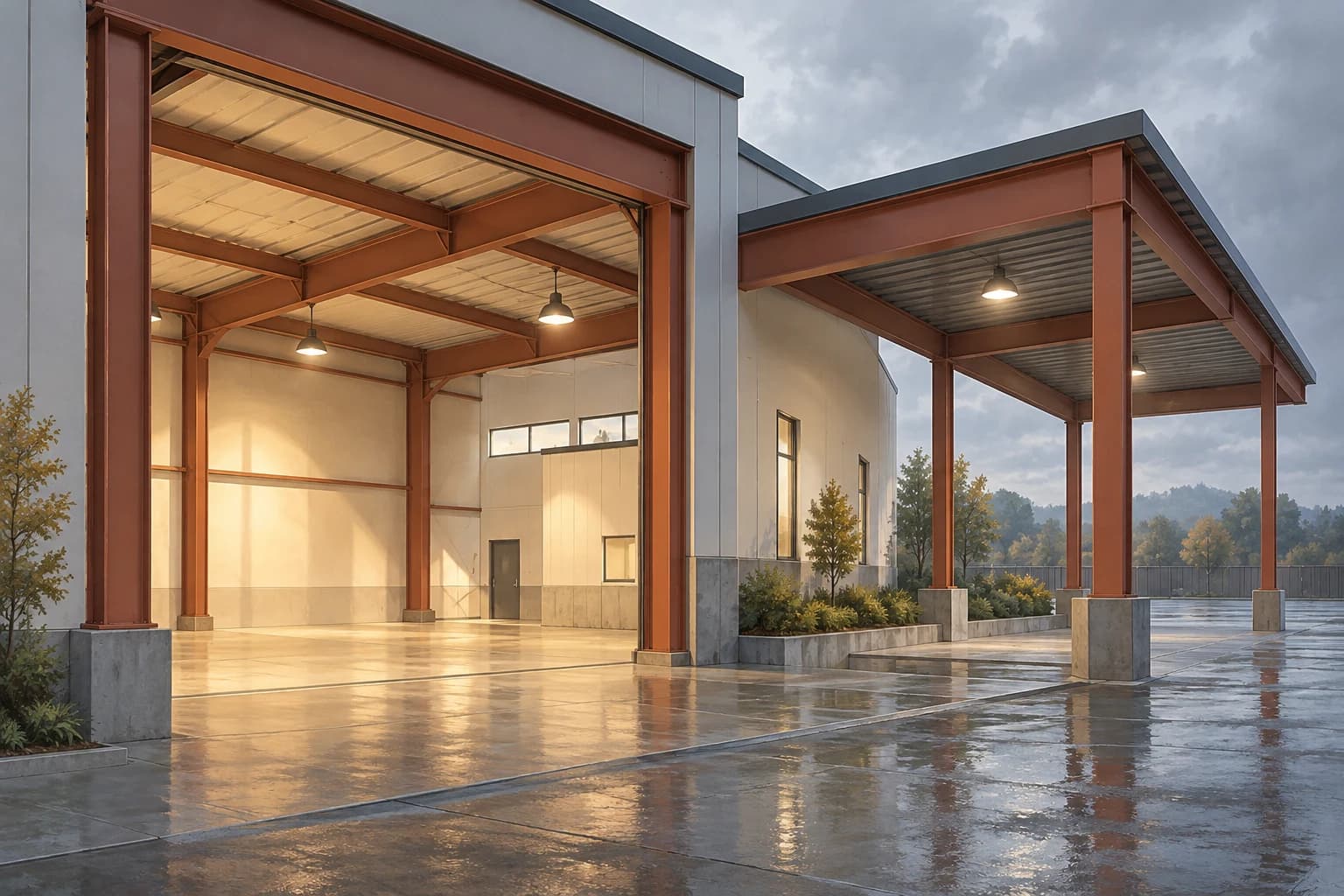
An illustrative warehouse purchase could include steel in a heated office, an unheated storage area and an exterior loading canopy. Put these locations on separate lines in the brief. Ask whether one specification is supported across them or whether the assessor needs separate zones. Similar-looking steel and a shared property address do not establish equivalent exposure.
Record what is known about the existing finish and substrate alongside that map. Flag unknown layers, inaccessible areas and reported wetting without diagnosing them. Ask the responsible specialist what further information is necessary. Do not commission disturbance of an unidentified coating simply to complete an estimating worksheet. Existing coating condition and any required hazard assessment remain separate prerequisites.
Separate the durability target from a repair promise
Sherwin-Williams' ISO 12944 systems guide pairs environmental corrosivity with a durability target when discussing system selection. It describes durability in relation to the first major maintenance painting and distinguishes that planning concept from a guarantee. The regional manufacturer guide is background for a specification discussion, not a Canadian project specification or a prediction for this building.
Ask the specifier to explain what the proposed designation means for the owner and which assumptions support it. Keep the requested maintenance horizon visible beside the exposure assessment. Avoid shortening the requirement to a phrase such as long-lasting industrial paint: that leaves bidders free to answer different questions with apparently similar offers.
Review warranty documents separately if a proposer supplies them. A longer durability designation does not, by itself, identify who pays for a repair. Equally, a shorter written warranty does not establish that the technical selection is unsuitable. Keep the technical objective and the contractual promise on separate lines so neither silently substitutes for the other.
Ask each bidder to answer the same paired requirement
Issue the reviewed zone schedule with the quotation request. For each zone, ask for the proposed system reference, identified substrate, preparation basis and supporting supplier response. Have the specifier connect those details to the exposure and durability requirement. A familiar brand name on the topcoat is not a complete answer to that request.
Make differences visible before comparing totals. One proposal may assume removal of an old coating while another assumes that it remains. Ask the reviewer whether each approach supports the same objective, and request clarification of the price implications. Do not select the lower preparation allowance and retain the other bidder's durability description as though they were interchangeable parts.
Use a short comparison record: location, assessed exposure, selected maintenance horizon, proposed system and unresolved condition. Keep technical exceptions beside the affected price. For example, a canopy proposal awaiting review of retained layers should remain conditional, even if the indoor steel package is ready to proceed. This separates a genuinely comparable offer from one that still needs assessment.
If the supplier offers a substitute, request a fresh response against the same paired requirement. Leave product selection, preparation standards and film-build requirements with the responsible specifier. This guide supplies no coating recipe, minimum thickness or automatic classification for a Saskatoon warehouse.
Include future maintenance access in the buying decision
Jotun's system-selection guidance separates environment selection, durability selection and the coating-system choice. It includes accessibility for maintenance among the considerations. The page concerns wind-power coatings and is used here only for that planning principle; its systems and performance claims are not recommendations for a local commercial repaint.
Tell the building team where later access could interrupt operations or require a separate arrangement. Ask the specifier how the available options fit the owner's maintenance plan, then obtain actual prices for the work and access involved. Do not turn an assumed reduction in future visits into a promised saving. A difficult-to-reach location deserves an explicit discussion, not an invented maintenance-free claim.
Before award, retain the accepted zone schedule and the reasoning for the selected option. Assign responsibility for establishing the subsequent inspection and maintenance plan. Keep changes in building use visible to the person managing that plan; a purchase made for one operating arrangement should not be silently carried into another.
Bring the reviewed scope to a PainterzRus commercial coating discussion and confirm the services included in the actual proposal. Specialist assessment, inspection and protective-system application require explicit arrangements. The useful outcome is a supported selection with known assumptions, not a lifespan guarantee or a claim that PainterzRus provides corrosion engineering.
Reference: Jotun: system-selection sequence and maintenance-access considerations; wind-power context
Keep this for your project
Your planning checklist
- Map steel locations and observed operating conditions without assigning your own corrosion category.
- Obtain the assessed exposure and selected maintenance horizon for each zone.
- Compare complete proposals against the same paired requirement.
- Resolve retained-coating assumptions and substitutions with the specifier.
- Keep future access, maintenance planning and warranty terms separately identifiable.
Should every steel surface in one commercial building receive the same durability specification?
Ask the responsible specifier to decide from the assessed zones and the owner's maintenance objective. A common specification may be supported, but the building address alone is not the reason to choose it. Record the basis before ordering the work.
Put the planning into practice
Download the free quote comparison kit to compare the work behind each price, or build your commercial project brief before requesting an estimate. No email required to use either tool.
Discuss your commercial project
For warehouse or light-industrial work, explore the access, surface-condition and downtime questions covered by our industrial and warehouse coating planning service.
Have a location and a rough scope? Request a commercial painting quote with the details you have. Access, timing and project requirements can then be reviewed for your property.
A planning guide from PainterzRus, a commercial painting business in Saskatoon. Not a site-specific coating specification, safety assessment or price quotation. Confirm requirements for your property before work begins.