The short answer
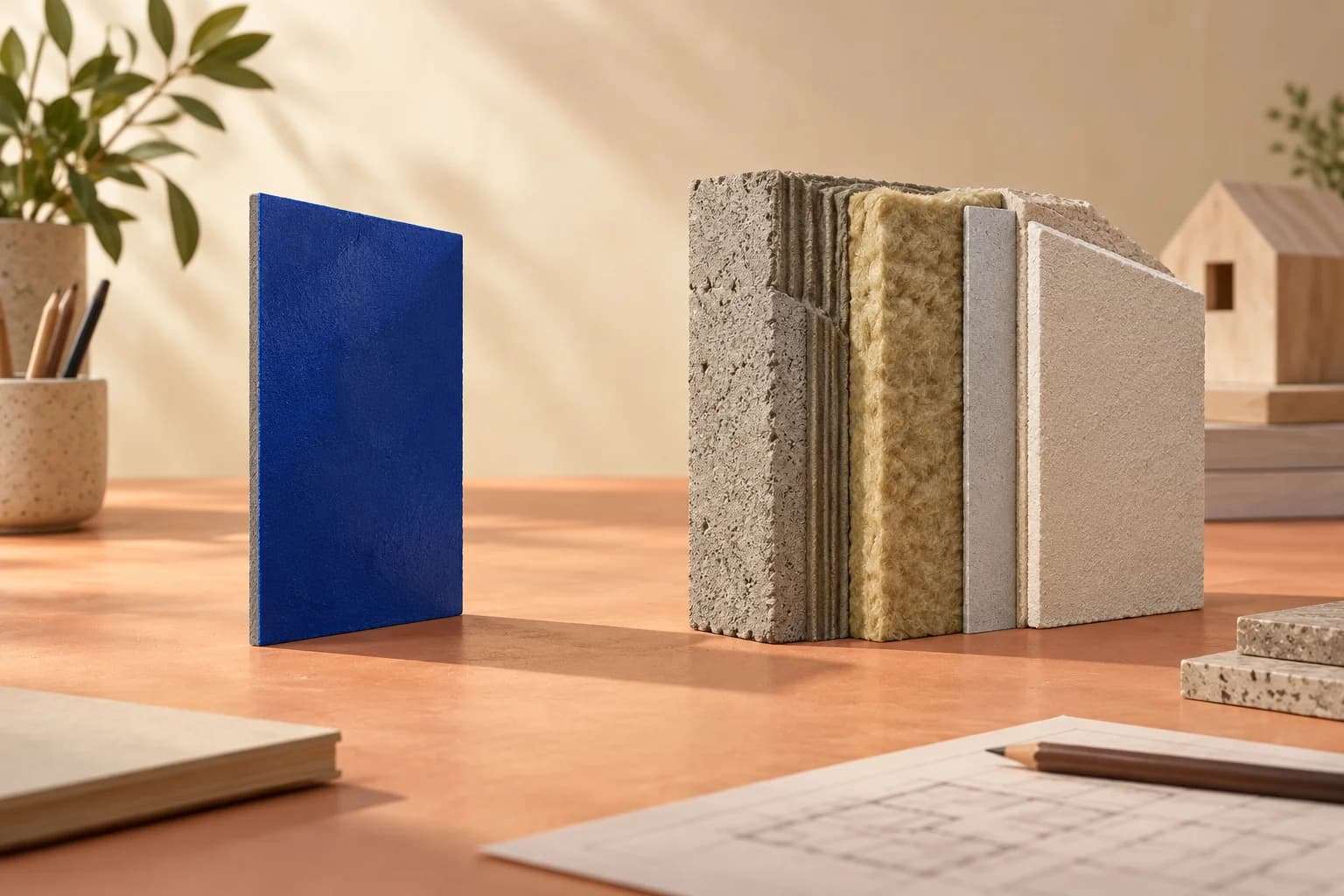
If a commercial repaint is offered as an insulation or energy-saving upgrade, ask for evidence of the exact claimed benefit before accepting the premium. Have a qualified building-energy reviewer connect that evidence to your property. A decorative sample and an insulation claim require different acceptance decisions.
Write down the benefit being sold
For a Saskatoon commercial property, separate the planned appearance refresh from any proposed energy upgrade. Ask the supplier to state whether its claim concerns material thermal resistance, a surface-temperature effect or reduced building energy use. Preserve the actual wording and qualifications. A general phrase such as thermal coating leaves the purchasing objective unclear.
Identify the surfaces included, the proposed product and the additional work associated with the claimed benefit. Ask whether the supplier expects other building changes at the same time. Give the owner a decorative base option and a separately described upgrade so the energy claim can be evaluated without obscuring the underlying repaint scope.
Request the evidence behind an insulation value
The US Energy Information Administration defines R-value as a measure of a material's resistance to heat flow. That definition gives the reviewer a specific property to investigate. It does not establish an R-value for a proposed paint or translate a material rating into this building's future utility bill.
Ask for the underlying test report, exact tested product, specimen description, coating thickness and conditions behind any claimed value. Have the reviewer identify the applicable test reference and explain whether the result describes the coating itself or a larger assembly. A report for a coated panel needs interpretation before its number is attributed entirely to the paint.
Where the sales material describes an equivalent insulation value, request the derivation and its limitations. Leave the comparison unresolved if the supporting calculation or test basis is missing. Do not ask maintenance staff to reproduce a heated-box demonstration or select a conversion from an unrelated product brochure.
Reference: US Energy Information Administration: definition of R-value
Ask what connects the product result to your building
The US Federal Trade Commission reported a court order against building-paint marketer FGI over deceptive insulation claims and misrepresented testing. This historical US case illustrates why supporting evidence matters. It is not a judgment about another supplier, a Canadian legal ruling or proof that every coating marketed for thermal purposes has identical performance.
Give the building-energy reviewer the proposed coverage, existing construction information and operating records requested for assessment. Ask what baseline is being compared, whether the estimate addresses heating, cooling or both, and which assumptions belong to this property. Keep a measured product property separate from a modelled building outcome and a promised financial return.
In an illustrative warehouse proposal, a supplier might offer a percentage saving without identifying the starting energy use or the affected wall area. Request a building-specific explanation before including that saving in the budget. If the owner also plans equipment or operating changes, ask the reviewer how those changes will be distinguished in any later evaluation.
Reference: Federal Trade Commission: historical FGI insulation-claim enforcement
Approve a supported purchase or leave the premium out
Ask the reviewer for a bounded conclusion: supported for the stated proposal, further evidence required, or no supported energy basis for the upgrade. Obtain the actual price difference separately. The owner can then decide whether to proceed with the decorative scope, commission more assessment or consider the reviewed upgrade. An attractive colour should not resolve missing performance evidence.
Keep the accepted claim, report references and project assumptions with the purchase. If verification after installation forms part of the offer, define its owner and method before award. Bring the released painting scope to PainterzRus and confirm the work offered. Energy modelling, building-envelope design and performance verification require separate arrangements; no savings or specialist capability is promised here.
Keep this for your project
Your planning checklist
- Separate the decorative scope from the claimed energy benefit.
- Obtain the test report and identify what was actually measured.
- Have a qualified reviewer assess relevance to the building.
- Keep assumptions, price premiums and expected savings distinct.
- Retain the supported conclusion and any verification agreement.
Does an advertised insulation value prove our energy bills will fall?
No. Ask the qualified reviewer to establish what the material evidence supports and how it relates to the proposed building work. Do not turn a product figure into a guaranteed saving without that assessment.
Put the planning into practice
Download the free quote comparison kit to compare the work behind each price, or build your commercial project brief before requesting an estimate. No email required to use either tool.
Discuss your commercial project
For tenant turns, corridors and repeat refreshes, explore the scope and handover questions covered by our commercial property maintenance painting service.
Have a location and a rough scope? Request a commercial painting quote with the details you have. Access, timing and project requirements can then be reviewed for your property.
A planning guide from PainterzRus, a commercial painting business in Saskatoon. Not a site-specific coating specification, safety assessment or price quotation. Confirm requirements for your property before work begins.