The short answer
Before buying a magnetic wall finish, give the supplier the magnets and lightweight display materials the office intends to use. Ask for a representative demonstration of the complete finished surface. Decide whether that combination meets the display brief or whether a separately specified board is a better purchase. A magnetic primer label does not establish a load capacity for your wall.
Bring the display materials to the scope discussion
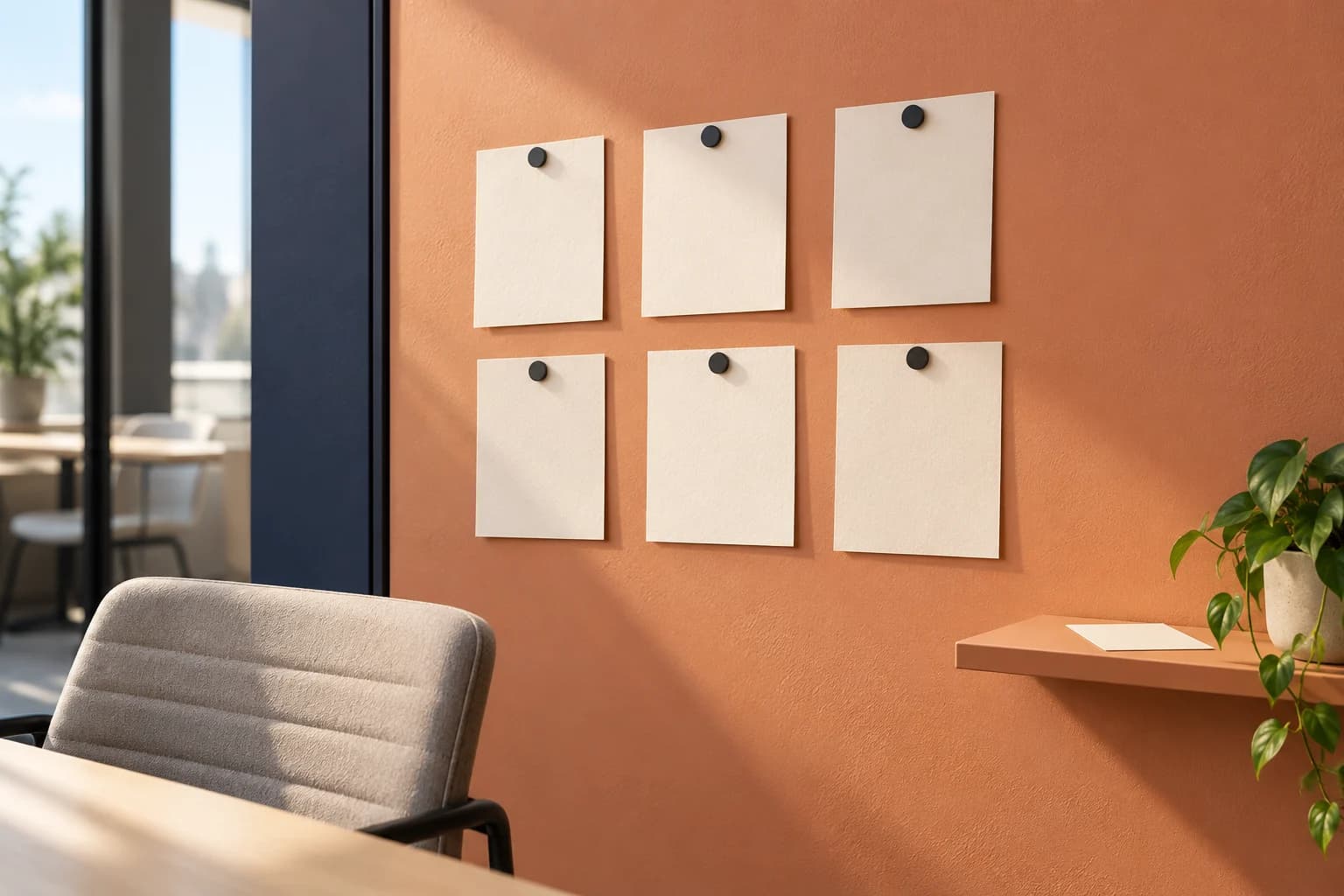
A Saskatoon office may want a planning wall where staff rearrange project cards without pins or adhesive. Start with that task. Collect representative blank cards, paper sheets and any intended lightweight sleeves, together with the proposed magnets. Record whether people display one sheet or a stack and how often they move it. Keep confidential project information out of demonstration materials.
Mark the useful display area on a room sketch. Include furniture and the reach needed for ordinary use, and identify the person who will approve the arrangement. Keep shelving, framed objects and equipment outside this brief. If the business needs a load-bearing attachment, ask for a separately designed mounting solution instead of extending a decorative coating claim.
Review the topcoat as part of the magnetic proposal
Rust-Oleum's Specialty Magnetic Primer technical sheet describes a basecoat that attracts magnets. It says strong magnets carrying little weight perform best and warns that heavy topcoating can reduce effectiveness. This US document supplies a concrete reason to review the finished build-up; it does not establish Canadian availability, commercial suitability or a rated holding capacity.
Ask the supplier to identify the exact locally proposed system, permitted decorative finish and supporting instructions. Have the contractor assess the receiving wall and state the preparation included. The supplier's small unfinished demonstration panel should not automatically stand for a wall with a different topcoat or texture. Ask which differences need another review before the owner commits.
If the same area must also support dry-erase writing, make that a separate compatibility question. Request explicit support for the combined system and assess each function. Do not assume that two specialty products can be layered together simply because both are marketed for office walls.
Reference: Rust-Oleum: Specialty Magnetic Primer SPC-11, magnetic performance and topcoat limitations, page 1
Make the demonstration resemble a working planning wall
Agree an authorized sample location or representative panel, the complete finish and the supplier's conditions for review. Ask the office's display owner to use the selected magnets with each agreed paper or sleeve arrangement. Record which combinations stay in place during the agreed review and which do not. This is a purchasing demonstration, not a standardized load test or an invitation to hang valuable objects.
For an illustrative planning room, a single paper card could meet the brief while a thicker document sleeve does not. The owner can simplify the display materials, request a supported alternative proposal or compare a dedicated board. Record the accepted combination rather than calling the whole wall suitable for anything magnetic. No actual project result is implied by this example.
Ask the contractor what happens to the trial area if the option is rejected. Include restoration or integration into the final decoration in the quotation. That keeps a useful purchasing trial from leaving an unexplained patch after the owner chooses another display method.
Compare complete options and preserve the accepted combination
Obtain a separate board proposal for the same usable area and display task. Include supply, appropriate mounting, removal responsibilities and any wall making good. Compare those items with preparation, the coating system, the demonstration and the magnets included in the paint proposal. Ask for actual prices; neither option has an assumed cost advantage.
At handover, retain the accepted magnet identity, display materials and finish record with the room instructions. Refer a later repaint or change in display materials back for review. Bring the decorative wall boundary to a PainterzRus commercial interior discussion and confirm the work offered. Specialist magnetic-coating application and board installation require explicit scope confirmation.
Keep this for your project
Your planning checklist
- Define the lightweight display task and collect representative materials.
- Request the complete magnetic and decorative coating proposal.
- Review the actual magnet and display combinations on a representative finish.
- Compare a board option with mounting and making good included.
- Retain the accepted combination and review later changes.
Does a magnetic wall finish replace fixings for shelves or framed displays?
Do not infer a structural holding capacity from the coating description. Keep the purchase within its reviewed lightweight display use and obtain a separate mounting solution for items requiring secure attachment.
Put the planning into practice
Download the free quote comparison kit to compare the work behind each price, or build your commercial project brief before requesting an estimate. No email required to use either tool.
Discuss your commercial project
For offices, retail spaces and other commercial interiors, review the surfaces, access and protection questions covered by our commercial interior painting in Saskatoon service.
Have a location and a rough scope? Request a commercial painting quote with the details you have. Access, timing and project requirements can then be reviewed for your property.
A planning guide from PainterzRus, a commercial painting business in Saskatoon. Not a site-specific coating specification, safety assessment or price quotation. Confirm requirements for your property before work begins.