The short answer
Before leaving painting protection for another trade, agree who owns its removal and whether the selected masking remains suitable for the extended period. Record the protected surface, product and removal deadline. Keeping protection in place is a new coordination decision when the original painting sequence changes.
Identify the finish that must survive the work
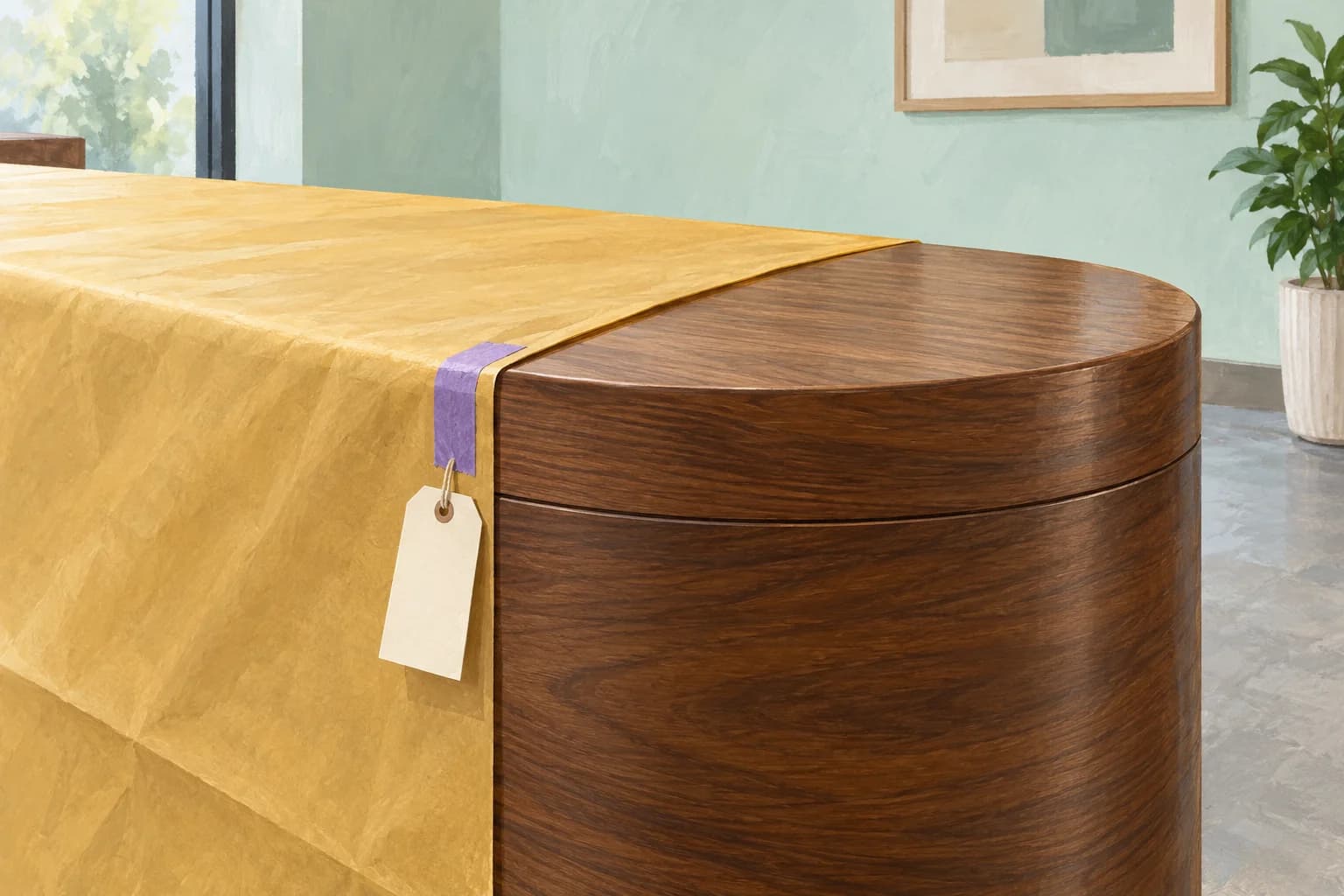
A Saskatoon office fit-out may finish painting before its signage or furniture installation. Someone then asks the painter to leave the masking for the next crew. Before agreeing, list the surfaces carrying adhesive: retained counter edges, painted trim, glazing or another finish. Photograph their condition while visible and identify the owner of any recently installed finish.
Separate protection attached to a surface from loose coverings nearby. Ask the contractor which adhesive products are present and when they were applied. An instruction to leave everything covered does not identify what can remain, for how long, or who will return to remove it. Keep unknown products on an unresolved list.
Check compatibility and removal limits together
3M's US page for Scotch Delicate Surface Painter's Tape 2080 identifies specific delicate surfaces and a product-specific clean-removal period. It also sets a condition for use on fresh paint. Those qualifications support checking both the receiving finish and the proposed duration; they do not approve every surface that looks delicate.
Obtain the applicable instructions for the actual supplied masking product and the retained finish. Have the contractor resolve any conflict with the relevant suppliers. Where a trial is appropriate, agree its location, permission and review before broad application. A successful trial supports that reviewed arrangement without guaranteeing every concealed edge will behave identically.
Reference: 3M: delicate-surface masking and product-specific use conditions
Make the trade transfer an explicit decision
3M's separate General Use Masking Tape 2025 page lists different removal conditions and excludes wallpaper, wallboard and wood floors. This comparison shows why the word masking cannot establish interchangeability. Neither the tape's colour nor another crew's familiarity with a different product settles the current handoff.
Use a short transfer record: location, protected finish, masking identity, application date, applicable removal limit, incoming trade and removal owner. Record the agreed removal appointment as well as the latest limit. Ask who checks the record if the following trade slips, and who can authorize an alternative protection arrangement.
In an illustrative reception project, a postponed sign installation could extend the requested protection beyond the arrangement the painter reviewed. Ask the contractor whether to remove and reassess protection or use a separately approved alternative. Obtain actual return-visit costs and access needs before choosing. Do not restart the recorded application date simply because responsibility changed.
Reference: 3M: general-use masking exclusions and removal conditions
Inspect retained surfaces when protection comes off
Arrange a joint review of the revealed finish, using the earlier condition photographs and the same location references. Record residue, lifting or other changes as observations. If a problem appears, stop extending the same removal approach and obtain contractor or supplier advice. Leave solvents, cutting and removal techniques to the responsible parties.
Keep any repair proposal separate from the record of what happened and from the question of payment responsibility. Close the protection item only when removal and the agreed finish review are recorded. Bring these handoff requirements into a commercial interior painting discussion with PainterzRus and confirm the offered scope. This guide promises no damage-free removal or specialist restoration service.
Keep this for your project
Your planning checklist
- Identify each retained finish and masking product.
- Record application dates and applicable removal limits.
- Resolve extended protection before transferring responsibility.
- Name the removal owner and response to schedule changes.
- Inspect revealed finishes and retain unresolved observations.
Can the next trade keep the painter's masking until its work ends?
Only after the responsible parties review the actual product, surface and extended duration. Transfer the removal responsibility explicitly; another trade's completion date does not replace the masking product's conditions.
Put the planning into practice
Download the free quote comparison kit to compare the work behind each price, or build your commercial project brief before requesting an estimate. No email required to use either tool.
Discuss your commercial project
For offices, retail spaces and other commercial interiors, review the surfaces, access and protection questions covered by our commercial interior painting in Saskatoon service.
Have a location and a rough scope? Request a commercial painting quote with the details you have. Access, timing and project requirements can then be reviewed for your property.
A planning guide from PainterzRus, a commercial painting business in Saskatoon. Not a site-specific coating specification, safety assessment or price quotation. Confirm requirements for your property before work begins.