The short answer
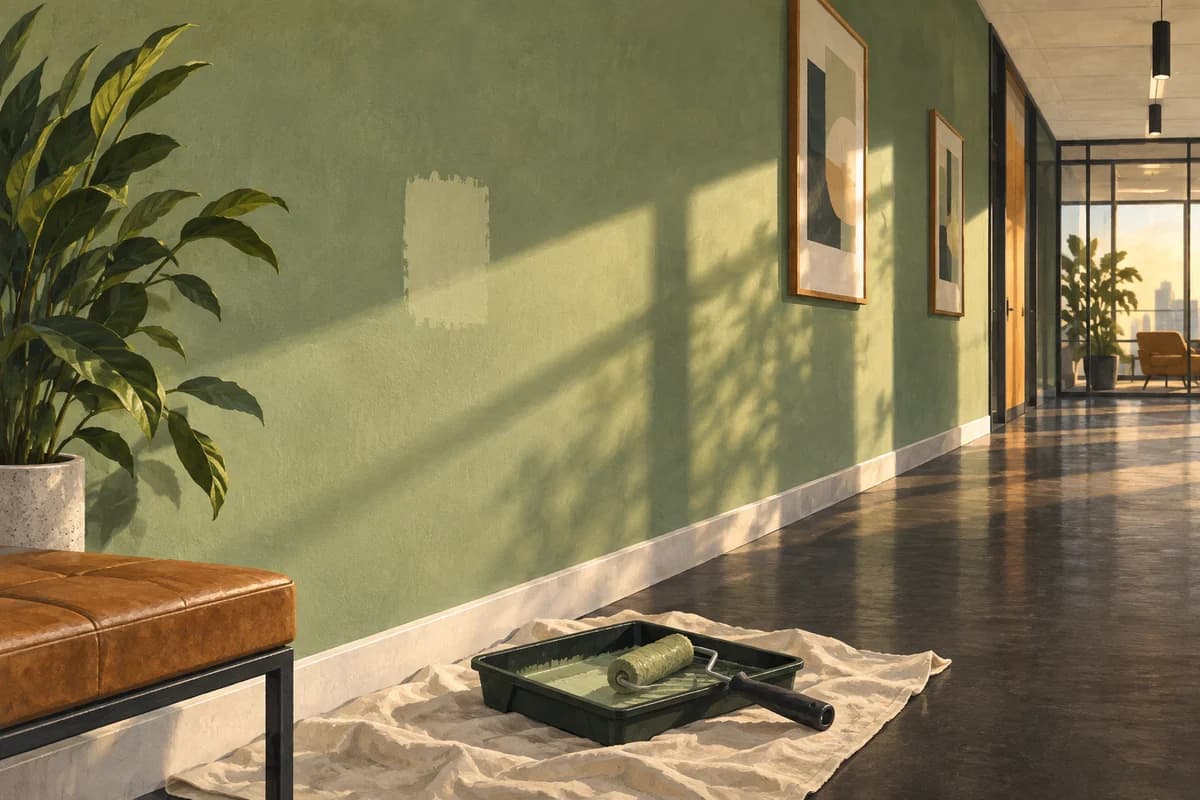
Treat a touch-up as a small appearance trial, not a promise of an invisible repair. If the existing coating is sound, ask for a representative sample and judge it in the room's normal lighting. When the sample remains conspicuous, compare repainting the complete wall to a natural boundary rather than adding more isolated patches.
Separate a surface mark from a coating problem
A mark behind an office chair and a strip of peeling paint require different conversations. First ask whether the mark can be cleaned using the existing coating's care instructions. If paint is lifting, the wall is damaged or staining keeps returning, arrange an assessment before treating the area as a colour-only repair. Do not scrape an unknown old coating just to obtain a sample.
For a Saskatoon property manager, the useful decision is the smallest acceptable scope, not automatically the smallest painted patch. List the affected walls and their visibility: a reception backdrop, a meeting-room corner and a service corridor may have different appearance expectations. Agree those expectations with the person who will approve the work.
Use one representative touch-up as a decision gate
Benjamin Moore's touch-up guidance identifies colour, sheen and surface texture as separate matching considerations. It also notes that a whole-wall repaint may be preferable when a touch-up does not blend. Matching a colour code alone therefore should not be sold as proof of an invisible result.
Before repeating repairs across the building, ask the contractor to complete one agreed trial in a representative location. Review the dried sample from the viewpoints people actually use, including the strongest normal side lighting. Record the accepted reference with a photo and a short note. A sample approved in a dim corner should not silently become the standard for a bright reception wall.
Reference: Benjamin Moore: touch-up colour, sheen and texture
Agree what happens if the patch stays visible
Ask for two clearly described options: the trial and localized work if accepted, and a full-wall alternative if it is not. Define the wall's stopping points, such as corners or trim, and identify anything that must be moved for the larger option. This lets the owner decide before a small maintenance visit turns into an unplanned repaint.
An illustrative decision note could read: reception trial accepted from the entrance and desk; meeting-room trial rejected under window light; request a separate full-wall price for that room. It is a planning example, not a PainterzRus estimate or completed job. Save the outcome so the next visit does not repeat an already unsuccessful approach.
Keep this for your project
Your planning checklist
- Confirm whether cleaning or assessment should come first.
- Find the original product and finish records where available.
- Choose a trial location and normal viewing conditions.
- Define a full-wall fallback and obtain approval before expanding work.
Will the original leftover paint always match?
No. Keeping the original paint is useful, but colour, sheen, texture and the existing finish still need to be compared in a trial. Approve the actual result rather than assuming the container guarantees it.
Put the planning into practice
Download the free quote comparison kit to compare the work behind each price, or build your commercial project brief before requesting an estimate. No email required to use either tool.
Discuss your commercial project
For tenant turns, corridors and repeat refreshes, explore the scope and handover questions covered by our commercial property maintenance painting service.
Have a location and a rough scope? Request a commercial painting quote with the details you have. Access, timing and project requirements can then be reviewed for your property.
A planning guide from PainterzRus, a commercial painting business in Saskatoon. Not a site-specific coating specification, safety assessment or price quotation. Confirm requirements for your property before work begins.