The short answer
When painted contact surfaces stick together, ask for separate checks of the coating and the component's fit. Paint blocking is unwanted adhesion between surfaces, not simply any stiff door. Identify the contact points and the actual finish before authorizing another repaint; a cosmetic touch-up alone does not establish that the sticking problem is resolved.
Locate the contact before assigning the cause
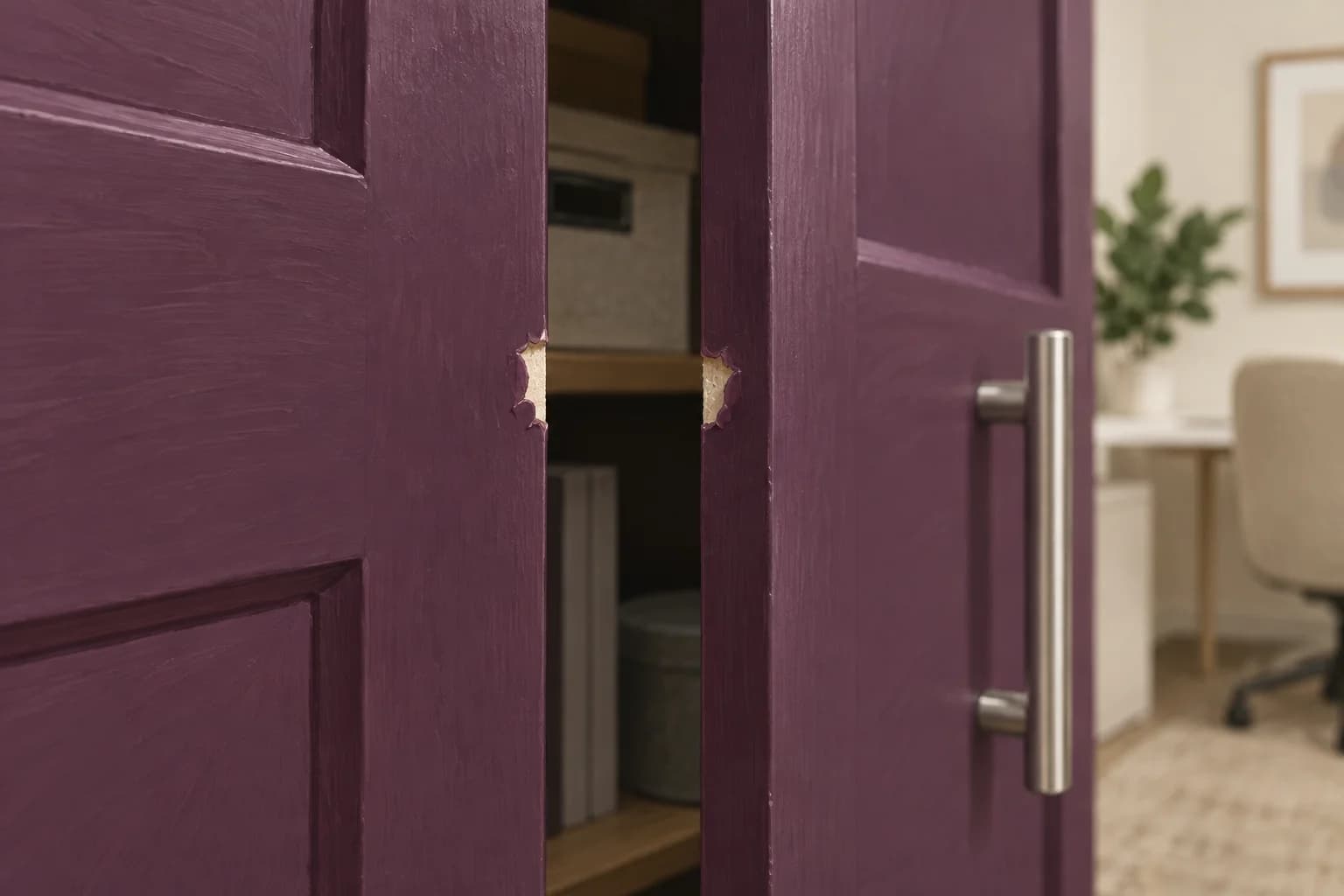
A freshly painted storage cupboard that pulls paint away at its meeting edges needs a different conversation from a latch that was difficult before decorating. Record which component sticks, where the surfaces meet and when the behaviour began. Include photographs already available from normal use; do not repeatedly force the component to recreate damage for a picture.
Sherwin-Williams describes blocking as paint adhering to another painted surface or weather stripping. Its guidance identifies insufficient drying before contact and low block resistance as possible contributors. Those are reasons to investigate the coating history, not proof that every sticking commercial door has a paint defect.
Reference: Sherwin-Williams: adhesion and blocking
Give the coating and fit questions separate owners
Bring the product identity and the record of when the component returned to normal use to the contractor. Ask the coating reviewer whether the specified finish suits the contact conditions and whether the observed damage is consistent with blocking. Ask the building's joinery or door specialist to resolve alignment, clearance or hardware concerns where those are in question. Do not assume the painting price includes mechanical adjustments.
For an illustrative office storage cupboard, the record could distinguish two torn painted edges from a separately reported loose hinge. Keep each finding and proposed remedy on its own line. For an opening with security, accessibility or life-safety functions, have the responsible building professional control any restrictions. Do not improvise wedges, remove seals or alter hardware to accommodate fresh paint.
Require more than an attractive repair photograph
A corrective proposal should identify affected contact surfaces, preparation, the intended finish and the product-specific conditions for resuming contact. Ask what supports its block resistance for this use. Do not substitute a universal waiting period or a homemade surface treatment for that explanation. The manufacturer's guidance links the finish choice with drying instructions; the project still needs a specific recommendation.
Agree how the responsible parties will review ordinary operation after the relevant release conditions are met. Record who checks it, which component is included and what happens if sticking returns. Accept the appearance repair and the operational outcome separately. If the fit remains unresolved, leave that item open instead of letting an even colour close the entire complaint. Save the findings against the component identifier so future maintenance does not repeat an unexplained repaint.
Keep this for your project
Your planning checklist
- Identify the sticking component and exact contact surfaces.
- Retrieve coating and return-to-use records.
- Separate coating findings from fit or hardware findings.
- Approve a compatible repair and product-specific contact release.
- Record appearance and operation outcomes separately.
Should every sticking painted door receive more paint?
No. First establish whether the issue involves coating adhesion, component fit, hardware or another condition. More paint is not a diagnosis, and any mechanical changes need the appropriate responsible party.
Put the planning into practice
Download the free quote comparison kit to compare the work behind each price, or build your commercial project brief before requesting an estimate. No email required to use either tool.
Discuss your commercial project
For tenant turns, corridors and repeat refreshes, explore the scope and handover questions covered by our commercial property maintenance painting service.
Have a location and a rough scope? Request a commercial painting quote with the details you have. Access, timing and project requirements can then be reviewed for your property.
A planning guide from PainterzRus, a commercial painting business in Saskatoon. Not a site-specific coating specification, safety assessment or price quotation. Confirm requirements for your property before work begins.