The short answer
Choose whether the commercial exterior should retain visible wood grain or present a more uniform colour before approving a stain proposal. Then have the supplier confirm which systems suit the existing wood and finish. Approve representative samples of the feasible options; a colour name alone does not specify opacity or establish compatibility.
State what the owner wants to see through the finish
For a Saskatoon shopfront timber screen or office courtyard fence, start with a visual requirement: retain the variation between boards, soften that variation, or move toward a more uniform colour. Identify the actual wood components separately from adjacent metal, composite or masonry surfaces. A wood-effect surface is not evidence that a timber stain is suitable.
Benjamin Moore describes several exterior stain opacities that reveal different amounts of wood grain and texture. Its colour guidance also notes that wood type and condition affect the result. Treat the display colour as a starting reference, not a prediction of the finish on every board at the property.
Write the appearance decision into the brief before seeking prices. For example, the owner may want grain visible across the entrance screen but prefer a uniform finish on the service-yard fence. That is an illustrative scope choice, not a completed PainterzRus project. Identify each area so the two requirements do not collapse into one generic stain allowance.
Reference: Benjamin Moore: exterior wood stain opacities and the effect of wood type and condition
Resolve the existing finish before comparing options
Collect previous product records and identify new boards, retained boards and areas with unknown treatment. Ask the contractor and supplier which proposed systems are supported on each condition. Keep an attractive grain-visible option provisional if nobody has established how it could be achieved over the existing finish.
An older PPG Canada Sico technical sheet provides a useful example of a product-specific restriction: its translucent exterior wood finish excludes previously painted or solid-stained surfaces. This is not a universal rule for every stain, nor a current product recommendation. Obtain the current instructions for the exact proposed system and a response addressing the property itself.
If a proposal depends on removing the old finish, request a separate assessment of feasibility, scope and expected appearance before accepting the final stain choice. Do not assume concealed wood will provide a uniform exposed surface. Any deteriorated components need a separate repair assessment; an opaque colour is not an answer to unsound timber.
Reference: PPG Canada: Sico 236-X80 technical sheet, historical product-specific substrate exclusions
Approve grain and variation on representative wood
Sherwin-Williams distinguishes semi-transparent stain, which reveals grain, from opaque stain, which conceals grain while leaving wood texture apparent. Grain pattern and physical texture are therefore separate acceptance questions. A solid-colour finish need not make a textured board resemble a smooth wall.
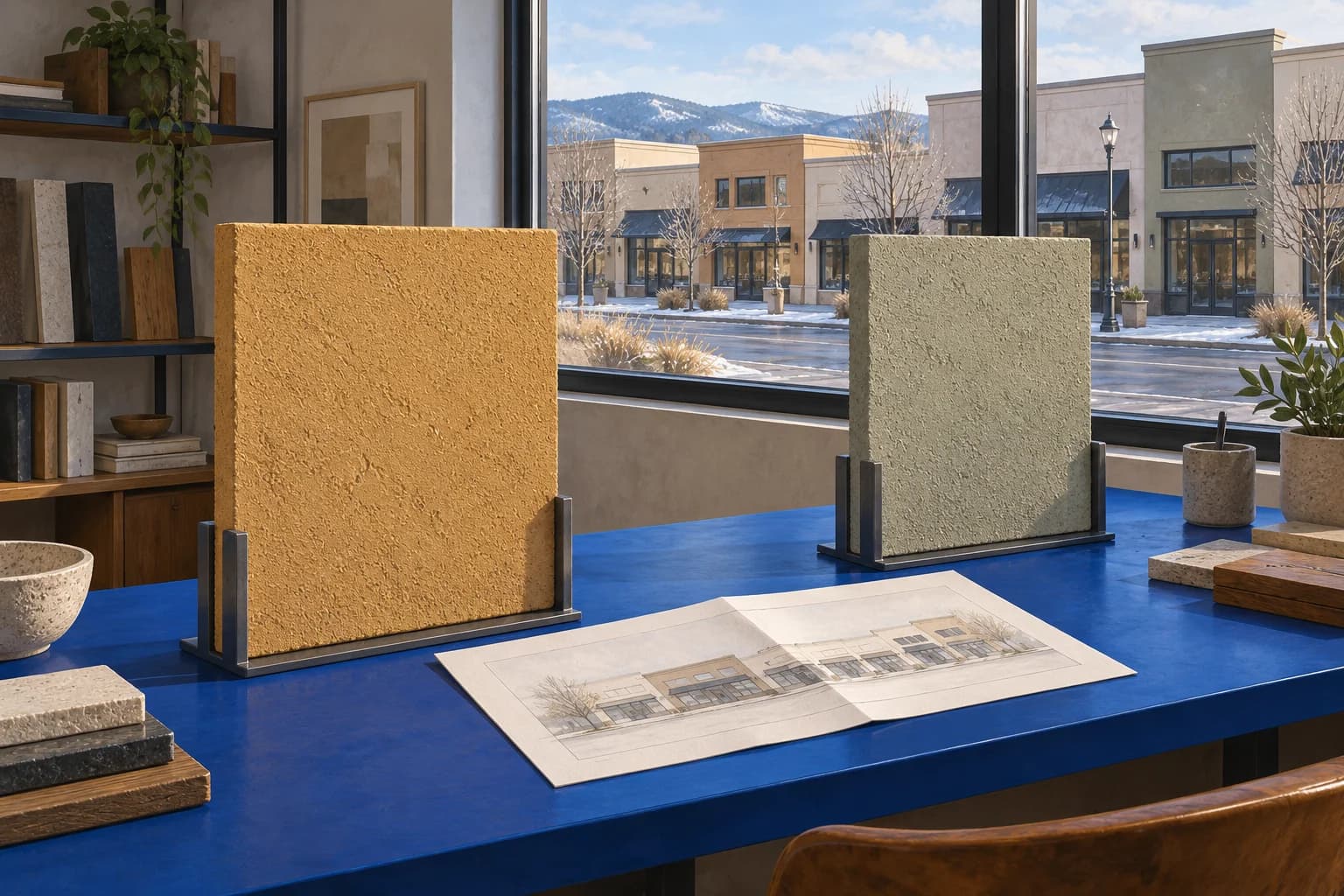
Ask for supplier-supported samples that include the actual range of retained and replacement wood. Record the preparation and complete proposed finish for each sample. Review the samples together from the normal customer approach, then close enough to judge grain visibility. Decide which variations are acceptable instead of approving only the most even board.
If the preferred sample does not deliver the agreed appearance, pause the broader purchase. Request a revised supported option or an amended boundary for that area. Do not direct extra coats merely to force a translucent product into behaving like an opaque finish. Any change must follow the selected system requirements and receive a new appearance review.
Reference: Sherwin-Williams: staining FAQs, semi-transparent versus solid-colour appearance
Compare complete scopes and retain the approved reference
Compare quotations using the same component list, existing-finish assumptions, preparation allowance and accepted opacity. Keep removal, timber repairs and access arrangements visible as separate inclusions or exclusions. A lower price for a different appearance or an unreviewed substrate is not a like-for-like alternative.
Ask each proposer for the selected system's inspection and maintenance guidance without assuming a universal recoating interval or lifetime advantage for one opacity. Retain the sample reference, product identification, colour and opacity together. A later order using the same colour name must still match the approved system and appearance requirement.
Bring the component list and sample decision to a PainterzRus property-maintenance painting discussion and confirm whether the proposed wood-finishing scope is offered. Specialist stripping, timber replacement and supplier assessments need explicit arrangements. This guide establishes no project price, service-life promise, product availability or contractor qualification.
Keep this for your project
Your planning checklist
- Identify the actual wood components and existing finish history.
- Choose the required grain visibility for each area.
- Obtain system-specific support for retained and replacement wood.
- Approve representative samples with acceptable variation recorded.
- Compare equivalent preparation scopes and retain colour, opacity and product records.
Can a transparent stain restore a natural-wood appearance over an existing solid finish?
Do not assume it can. Have the supplier assess the existing finish and proposed system first. If removal is needed, establish its feasibility and expected appearance separately before approving a grain-visible result.
Put the planning into practice
Download the free quote comparison kit to compare the work behind each price, or build your commercial project brief before requesting an estimate. No email required to use either tool.
Discuss your commercial project
For tenant turns, corridors and repeat refreshes, explore the scope and handover questions covered by our commercial property maintenance painting service.
Have a location and a rough scope? Request a commercial painting quote with the details you have. Access, timing and project requirements can then be reviewed for your property.
A planning guide from PainterzRus, a commercial painting business in Saskatoon. Not a site-specific coating specification, safety assessment or price quotation. Confirm requirements for your property before work begins.