The short answer
Before accepting a touch-up quotation for factory-finished metal panels, identify the original finish and ask the finisher or system supplier which repair route fits the damage. Separate a limited blemish repair from a field-restoration proposal. Matching the original colour does not establish that an air-dried repair recreates the factory coating's performance.
Recover the factory finish before buying its repair
For a Saskatoon commercial entrance with scratched metal panels, collect the panel supplier, original finish specification and available order records. Mark the affected components on photographs. Ask whether the finish is factory applied, a later field repaint or still unidentified. Keep dents, loose components and other assembly concerns separate from the coating repair; their assessment belongs with the appropriate building professional.
Arkema's published Kynar 500 FSF specification describes a factory-applied, oven-baked finish and calls for a formulator-approved applicator. That is a specific factory system, not a description of every painted metal panel. It illustrates why a familiar resin name or matching colour cannot, by itself, identify an equivalent repair process on an occupied building.
If the records are incomplete, ask the panel supplier or original finisher what evidence would establish the finish and its repair options. Do not relabel an unknown coating as Kynar, powder coating or ordinary enamel based on appearance. A quotation can identify this investigation as an unresolved item before committing to a repair system.
Reference: Arkema: Kynar 500 FSF product specifications, factory application and specification language
Ask whether touch-up is the right category of work
Linetec's historical technical article distinguishes small-blemish touch-up from field restoration of factory PVDF finishes. It explains that its touch-up material differs from the factory coating in curing, adhesion and durability, and describes a separate air-dry restoration system. Use that distinction to request current project-specific guidance, not to copy the article's older product instructions or warranty terms.
Ask the responsible finisher to classify the proposed intervention: limited touch-up, a defined field-restoration system, or referral for another component solution. Supply the number and distribution of affected panels, not just a total area. Several scattered defects across a prominent entrance create a different review question from one isolated blemish, even if the aggregate painted area is small.
Keep the repair boundary and the product choice together. A proposal to extend a small repair across a complete panel should return for technical review rather than automatically use more of the touch-up material. Ask what finding would trigger a revised scope, and who makes that decision before the work expands.
Reference: Linetec: Touch-Up Paint — How to Apply and When to Use; historical manufacturer guidance
Compare defined repair routes, not matching paint names
Request a proposal that identifies the existing finish, affected components, proposed repair system and the supplier's supporting response. Ask the proposer to explain any applicator qualification the selected system requires and how it will be met. Leave preparation methods, compatibility assessment and application conditions with the responsible specialists. This guide provides no sanding, solvent or coating recipe.
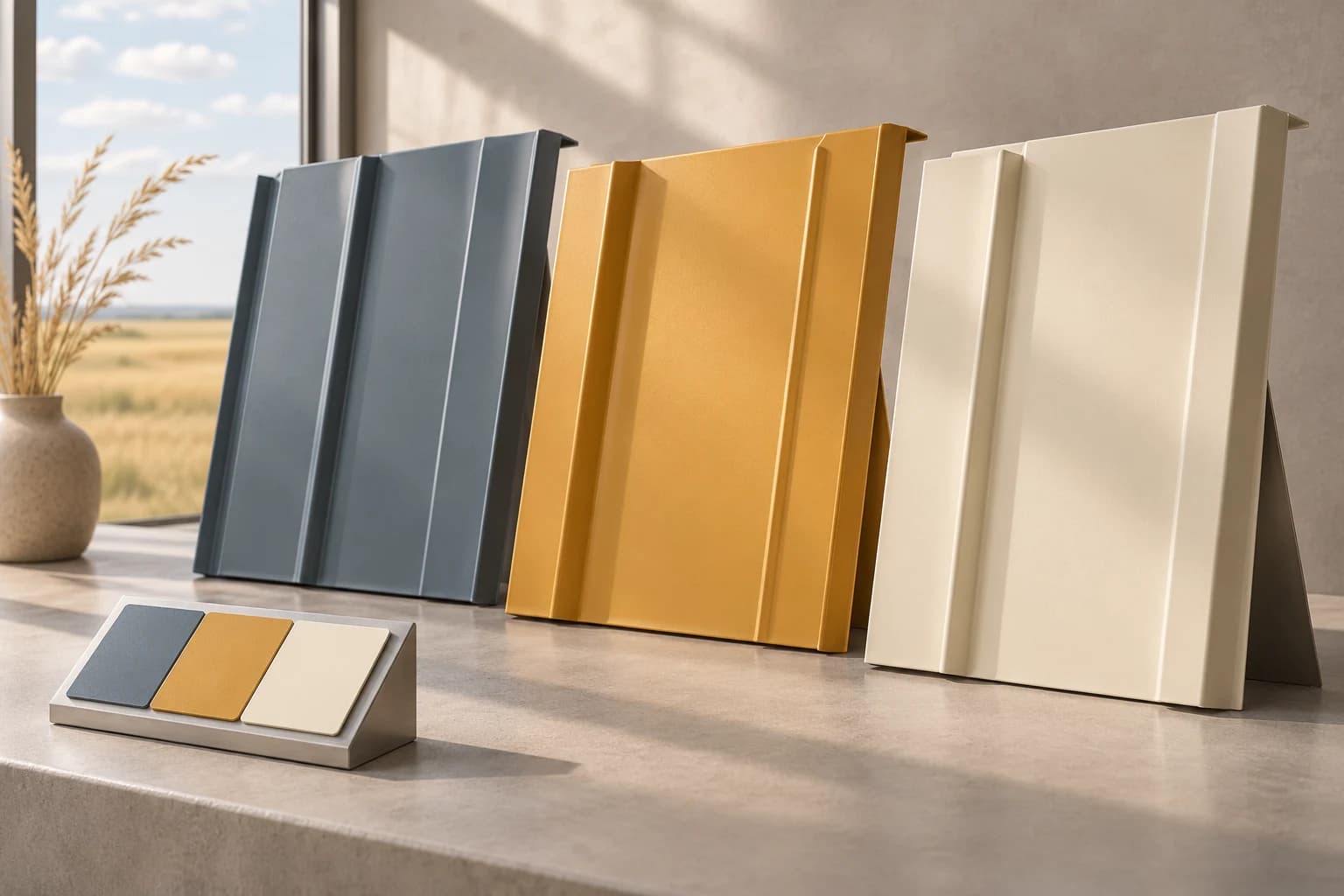
Separate technical acceptance from appearance acceptance. A representative sample can show the proposed colour, sheen and visible transition under agreed viewing conditions. Ask separately what supports the repair system's suitability and any performance description. A sample that looks acceptable today does not reproduce the factory curing process or establish future weathering behaviour.
Consider an illustrative entrance with one scratched panel and several damaged panel edges. Ask whether the proposed repair covers each condition, or whether some components need a different response. Obtain separate scopes and prices for the supported alternatives. Replacement is an option for the component specialist to assess, not an automatic conclusion that any scratched panel must be discarded.
Release a repair package with its limits intact
Before authorizing work, retain the accepted component list, repair-system reference, appearance sample and unresolved exclusions together. If an original finish warranty may apply, ask its issuer about the proposed intervention before proceeding. Do not assume either that all repairs cancel coverage or that a colour match preserves it. Obtain the terms for the actual project rather than importing a period from a supplier's general article.
Record which surfaces remain under the original finish description and which receive the new field treatment. If the repair material or extent changes, return that change to the responsible reviewer. At closeout, obtain the actual product and work records so a future property team does not treat every panel as having the same finish history.
Bring the reviewed scope to a PainterzRus property-maintenance painting discussion and confirm what work is offered. Factory finishing, proprietary restoration systems, component replacement and specialist assessment require explicit arrangements. This guide promises no licensed-applicator status, factory-equivalent performance, warranty coverage or invisible repair.
Keep this for your project
Your planning checklist
- Identify the original panel finish and record missing information.
- Have the finisher distinguish limited touch-up from field restoration or another component solution.
- Obtain a repair-system proposal for the actual damage and panel boundaries.
- Approve appearance separately from technical suitability and any warranty response.
- Retain the repaired-component map and the actual field-treatment record.
Does paint with the original colour code restore the factory finish?
Not by itself. Ask the responsible finisher to identify the supported repair system and its limits. Colour approval does not establish an equivalent curing process, weathering performance or warranty position.
Put the planning into practice
Download the free quote comparison kit to compare the work behind each price, or build your commercial project brief before requesting an estimate. No email required to use either tool.
Discuss your commercial project
For tenant turns, corridors and repeat refreshes, explore the scope and handover questions covered by our commercial property maintenance painting service.
Have a location and a rough scope? Request a commercial painting quote with the details you have. Access, timing and project requirements can then be reviewed for your property.
A planning guide from PainterzRus, a commercial painting business in Saskatoon. Not a site-specific coating specification, safety assessment or price quotation. Confirm requirements for your property before work begins.