The short answer
For a dark-to-light repaint, ask for a proposed coating system and a representative coverage sample, not a universal promise about coat count. Agree how the finished wall will be reviewed under normal building lighting and what happens if the sample shows through or appears uneven.
Separate colour approval from coverage approval
Choosing a pale colour does not settle how it will look over an existing dark commercial wall. A small colour chip helps discuss the intended hue, but it does not demonstrate the hiding performance of the proposed system on that wall. Record the old finish, visible repairs and any differences across the surface before the estimator defines the work.
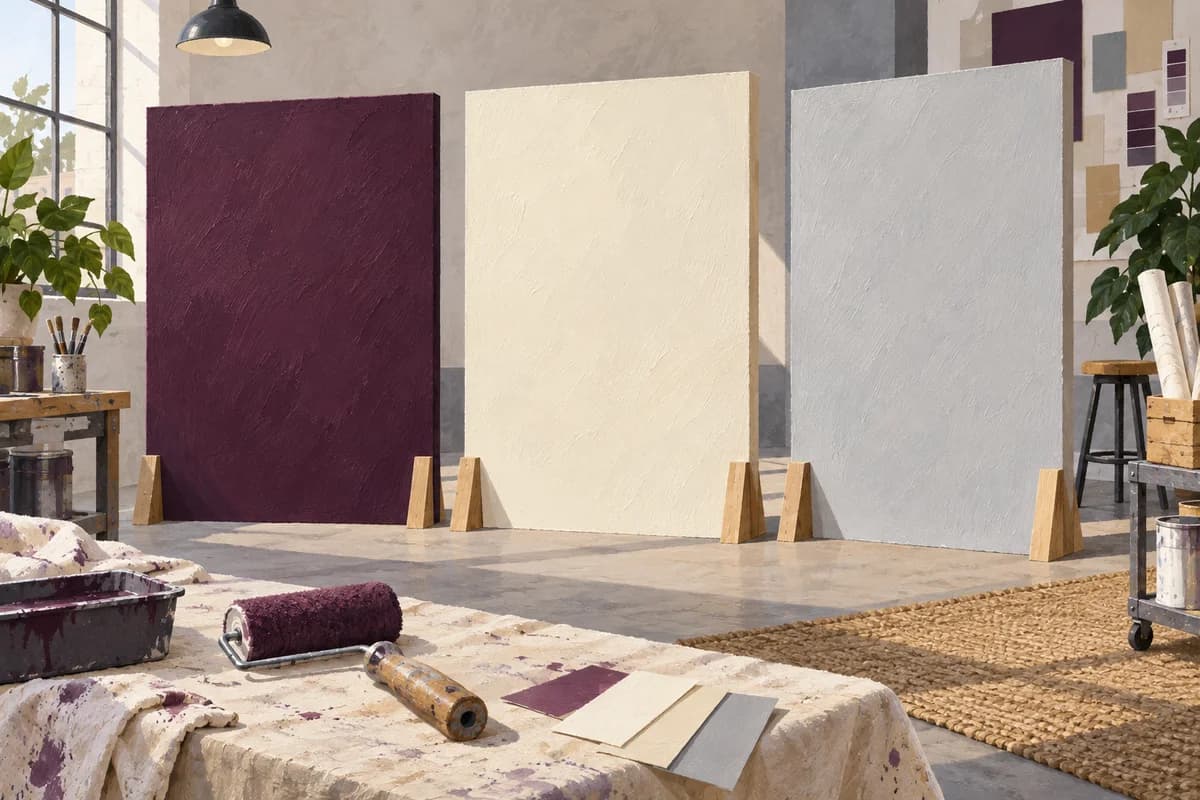
A sample can answer a narrower, useful question: does this preparation and coating proposal create the agreed appearance over the actual background? Use a location that includes relevant conditions rather than the easiest isolated patch. Label the sample in the project record so later discussion refers to the same system, not simply to white paint.
Ask what the coverage allowance assumes
Sherwin-Williams identifies factors including colour contrast, surface porosity, film thickness and application equipment in its guidance on hiding. Its discussion also addresses primers and following application instructions. These factors explain why a blanket coat-count answer is not a reliable substitute for reviewing the particular wall and product combination.
Ask whether the proposal includes a primer, which surfaces it covers and why it is appropriate. Have the contractor identify the manufacturer's application and recoating requirements. Do not instruct workers to stretch material, over-thin it or force a thicker application to meet a calendar target. The product instructions should govern the proposed method.
Reference: Sherwin-Williams: poor hiding
Define the review and the adjustment route
Agree the viewing locations and normal lighting for reviewing the sample and completed work. Look at repaired and unrepaired portions as well as the centre of an uninterrupted wall. Document the approved sample with its system details; a phone photograph alone may not communicate subtle differences in opacity or sheen.
Before authorizing the remaining area, ask what happens if the trial does not meet the agreed result. The answer should describe review, revised preparation or coating scope and approval of any change. Keep that decision distinct from a late change of colour. A Saskatoon property manager can then compare proposals on what they include and how they address an unresolved coverage result.
Keep this for your project
Your planning checklist
- Record the dark background and repaired areas.
- Review a representative system sample.
- Confirm primer and application assumptions.
- Agree normal-lighting acceptance conditions.
- Document the response if the sample does not cover adequately.
Will two coats always cover a dark commercial wall?
No universal coat count is appropriate for every background and coating system. Ask the contractor to define the proposal and demonstrate the agreed result on a representative sample.
Put the planning into practice
Download the free quote comparison kit to compare the work behind each price, or build your commercial project brief before requesting an estimate. No email required to use either tool.
Discuss your commercial project
For offices, retail spaces and other commercial interiors, review the surfaces, access and protection questions covered by our commercial interior painting in Saskatoon service.
Have a location and a rough scope? Request a commercial painting quote with the details you have. Access, timing and project requirements can then be reviewed for your property.
A planning guide from PainterzRus, a commercial painting business in Saskatoon. Not a site-specific coating specification, safety assessment or price quotation. Confirm requirements for your property before work begins.