The short answer
When a new coating peels from a glossy surface, another topcoat should not be the default response. Ask which layer is failing, whether adjacent paint is sound and how the proposed preparation and primer will establish adhesion. Approve a documented assessment and trial before repeating the same system across the remaining surface.
Distinguish peeling from an appearance mismatch
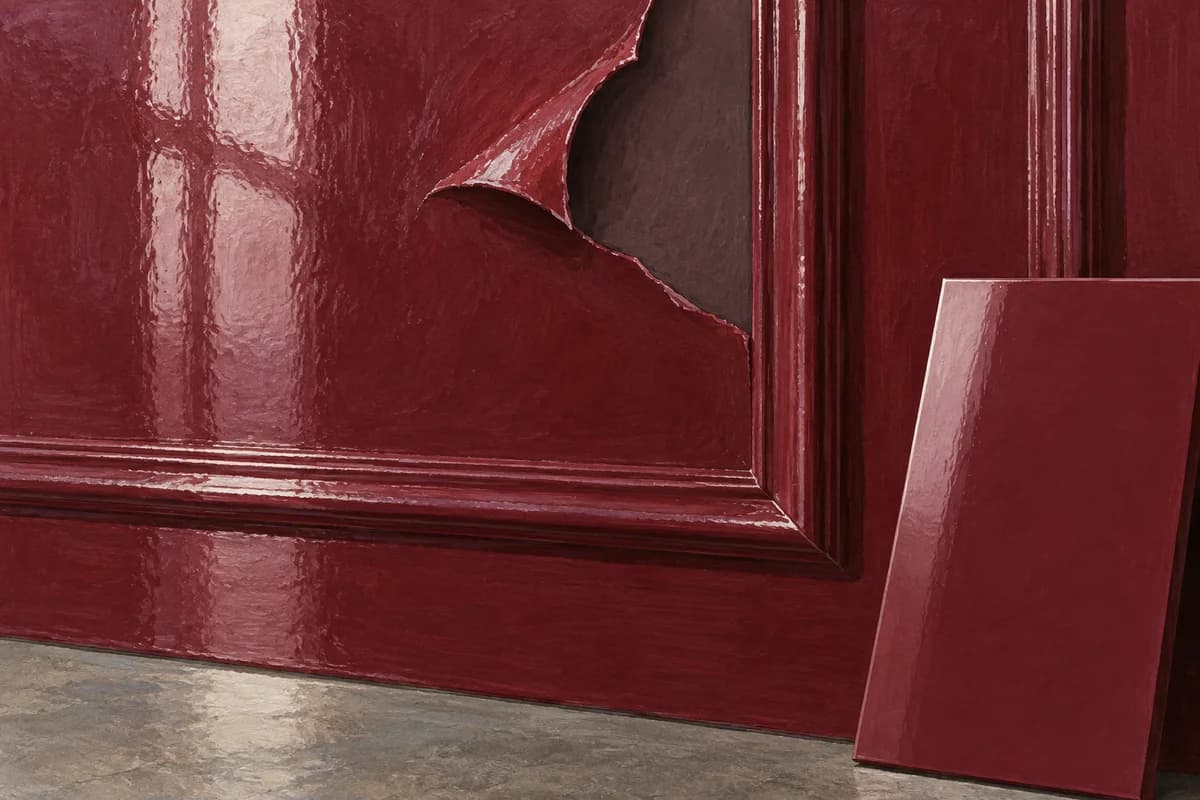
A patch that reflects light differently is an appearance issue; a film that lifts from the layer below raises an adhesion question. Photograph the edge and the surrounding area without pulling off more material. Note when the repaint was completed and whether cleaning, impact or another event preceded the observation. Report facts without assigning blame from the photograph.
Find the earlier coating specification, cleaning history and recent work record if they exist. An unknown finish should stay recorded as unknown. Do not ask office or maintenance staff to sand or strip it for a quick test; the responsible contractor must first address material, dust and site-safety considerations.
Ask what supports the proposed preparation
Sherwin-Williams identifies hard, slick and glossy surfaces as a potential adhesion difficulty. Its problem-solving guidance addresses contamination, sound underlying material, preparation and checking adhesion around the failed area. That supports looking beyond the visibly peeled patch when defining an assessment.
Ask the estimator to explain the intended stopping point for preparation and how soundness will be checked. The scope should say whether the remedy is localized or includes the entire panel, wall or trim run. Request the rationale for a bonding primer if one is proposed; a product name alone does not establish that the remaining layers can support a new system.
Reference: Sherwin-Williams: peeling over hard, slick surfaces
Use a trial with an explicit review point
Agree the location, preparation, proposed products and review method for a trial area. Let the contractor specify the appropriate timing and checks for that system. Keep an appearance review separate from whatever adhesion assessment is needed. A panel looking smooth immediately after application is not, by itself, proof that the underlying problem is resolved.
For a commercial owner, the decision record should identify which findings allow the remaining work to proceed and which require a revised scope. If adjacent areas fail the assessment, obtain the updated preparation and access plan before authorizing expansion. Preserve the original failure photographs alongside the trial record so future maintenance has a useful history.
Keep this for your project
Your planning checklist
- Photograph lifting paint without increasing the damaged area.
- Collect available coating and cleaning records.
- Define how adjacent soundness and preparation limits will be assessed.
- Specify the trial and its review criteria.
- Approve a revised scope before extending repairs.
Does a bonding primer mean all old paint can stay?
Not automatically. The existing layers still need to be assessed for suitability and soundness. Ask the contractor to explain what can remain and what must be addressed before the new system is applied.
Put the planning into practice
Download the free quote comparison kit to compare the work behind each price, or build your commercial project brief before requesting an estimate. No email required to use either tool.
Discuss your commercial project
For offices, retail spaces and other commercial interiors, review the surfaces, access and protection questions covered by our commercial interior painting in Saskatoon service.
Have a location and a rough scope? Request a commercial painting quote with the details you have. Access, timing and project requirements can then be reviewed for your property.
A planning guide from PainterzRus, a commercial painting business in Saskatoon. Not a site-specific coating specification, safety assessment or price quotation. Confirm requirements for your property before work begins.