The short answer
Do not make stain coverage the first decision. Have the water source investigated and repaired, establish whether the wall or ceiling needs material repairs, and confirm that the surface is ready for the selected coating system. A stain-blocking primer can be part of cosmetic restoration; it is not a repair for an active leak.
Create a factual incident record
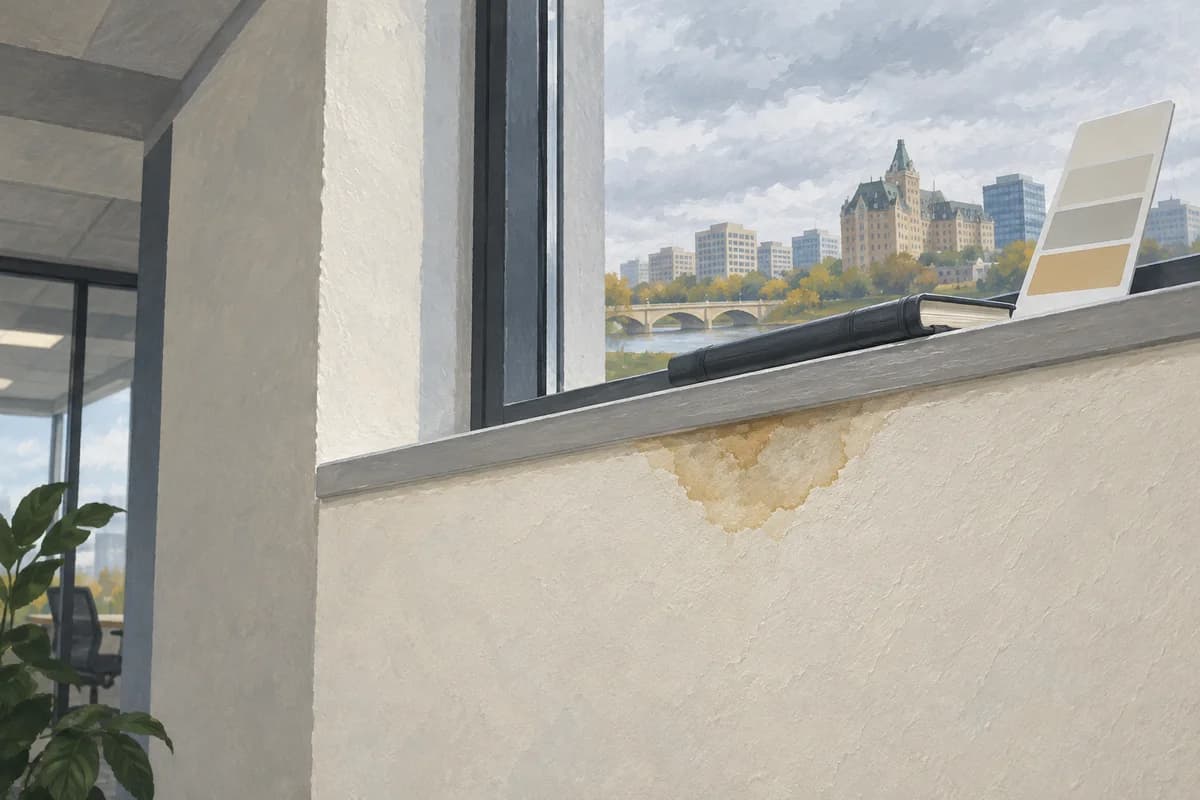
Record where the stain is, when it was first noticed and whether it has changed. Photograph the location from a safe position and add the room name. Keep observations separate from diagnoses: a mark below a window does not, by itself, prove that the window caused it. Give the building team any known leak or repair history.
Keep occupants away from an area that the building team considers unsafe. Do not disturb swollen ceilings, unknown coatings or suspect material to prepare for a quote. If there are concerns about electrical equipment, mould or damaged building materials, involve the appropriate qualified person before cosmetic painting. This guide is a coordination aid, not a remediation procedure.
Separate building repair from stain treatment
Sherwin-Williams' stain guidance says the water source must be found and repaired. It also identifies possible replacement of excessively damaged plaster, drywall or wood and the use of a suitable stain-sealing primer. That sequence matters: coating the visible mark does not establish that the underlying problem is resolved.
Ask who is responsible for each handoff. The building team should identify what investigation and repairs have been completed; the painting contractor should state what surface condition and product requirements must be met before coating. Do not invent a universal waiting period. Record the readiness decision and any open issue instead of treating a scheduled painting date as clearance.
Reference: Sherwin-Williams: water staining and treatment prerequisites
Price restoration with a stop point
A useful proposal separates investigation by others, material repairs, stain treatment and the final decorated area. Ask whether the finish scope ends at the affected patch, the complete wall or a ceiling boundary. Appearance expectations and the size of the repair can affect that choice even after the moisture issue is resolved.
Agree a stop rule if new dampness, staining or unexpected damage appears. For example, hold the affected zone for building review and continue only unrelated, released areas if the site plan permits. Keep the before-and-after records with the repair history. A covered stain is not evidence of a repaired building, and a fresh photograph should not erase the original problem record.
Keep this for your project
Your planning checklist
- Photograph the stain and record changes without guessing the cause.
- Confirm investigation and repair responsibility.
- Obtain a surface-readiness decision for the specified products.
- Separate material repairs, stain treatment and finished-area boundaries.
- Agree what stops work if the problem returns.
Can a stain-blocking primer fix a recurring water mark?
It may address staining within an appropriate coating system, but it does not fix the source of water. Recurrence calls for building assessment before another cosmetic coat.
Put the planning into practice
Download the free quote comparison kit to compare the work behind each price, or build your commercial project brief before requesting an estimate. No email required to use either tool.
Discuss your commercial project
For offices, retail spaces and other commercial interiors, review the surfaces, access and protection questions covered by our commercial interior painting in Saskatoon service.
Have a location and a rough scope? Request a commercial painting quote with the details you have. Access, timing and project requirements can then be reviewed for your property.
A planning guide from PainterzRus, a commercial painting business in Saskatoon. Not a site-specific coating specification, safety assessment or price quotation. Confirm requirements for your property before work begins.