The short answer
If a recent commercial coating develops a crinkled surface, hold the proposed cosmetic overcoat until the contractor assesses the affected film. Record where the wrinkles occur and ask what must be corrected beneath the final appearance. The buying decision is a supported repair scope, not simply an extra coat.
Record the texture and the affected boundary
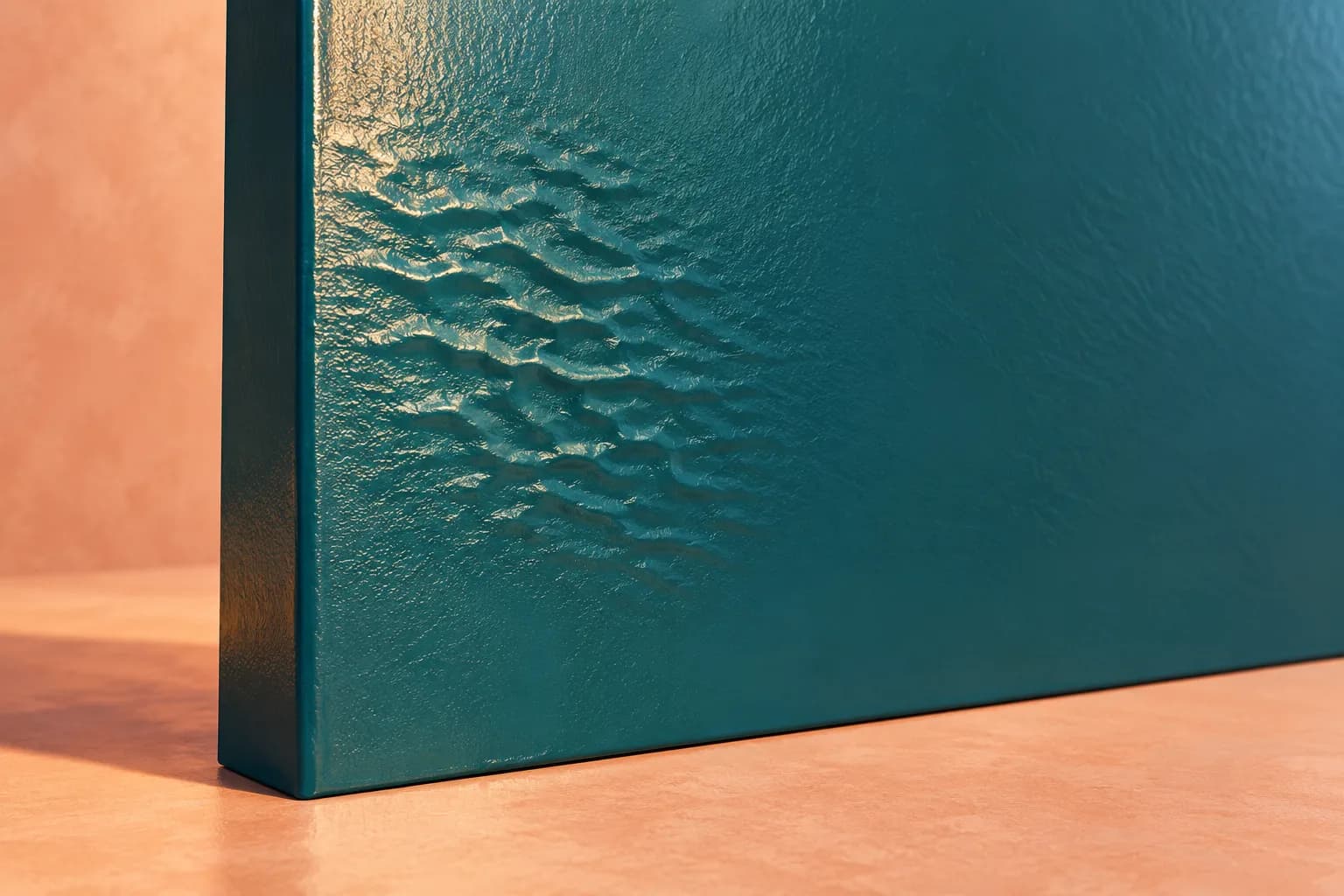
For a Saskatoon commercial interior, photograph the full panel or wall and a close view of the crinkled area. Note when it was first noticed, which surfaces were painted together and whether the pattern changes at edges or corners. Keep those observations separate from a conclusion about workmanship or the product. A photograph records appearance; it does not identify every layer involved.
Ask the contractor to distinguish raised wrinkles from a colour band, ordinary roller texture or paint lifting away from a smooth surface. Those conditions may need different reviews. Do not ask maintenance staff to scrape a sample or press into a soft film. Have the responsible contractor address material identification and the controls needed before any investigative disturbance.
Recover the sequence that produced the film
Sherwin-Williams describes wrinkling as a crinkled surface associated with a skin forming over uncured paint. Its possible causes include excessive application, uneven drying conditions, moisture exposure, recoating an insufficiently cured layer and contamination. These are investigation leads, not a diagnosis of this building or proof that one party caused the defect.
Request the product identifiers, layer sequence, recorded application intervals and available site-condition notes. Ask the reviewer which observations support the proposed explanation and which remain unknown. If several rooms share one paint delivery but only one surface has wrinkles, preserve that distinction. A material invoice alone cannot establish how each area was prepared or coated.
Reference: Sherwin-Williams: wrinkling causes and correction principles
Make the correction boundary explicit
The manufacturer's guidance addresses removal of the wrinkled coating, suitable preparation and reapplication under the product instructions. It does not support hiding the texture beneath an unspecified heavier coat. Have the contractor translate its assessment into a location-specific proposal; this guide provides no stripping, sanding, solvent or hazardous-material procedure.
The proposal should identify what will be removed or retained, how the adjoining finish will be addressed, the replacement coating system and the point when the owner can review the result. Ask for the actual access disruption, price and schedule effect. Keep a requested colour change separate so a repair discussion does not quietly become a different decorative specification.
Review one representative correction before expansion
An illustrative reception project might have wrinkles concentrated on a newly painted trim panel while adjacent walls remain unaffected. Agree a representative correction area and the contractor's review timing before extending work to every panel. Retain the original observations and compare the corrected result under agreed lighting. Do not invent a universal cure period or acceptance tolerance.
Record whether the trial supports proceeding, needs revision or remains unresolved. A smooth appearance alone should not override a technical concern raised by the reviewer. Keep the final repair record with the building's finish information. Bring that record to a commercial painting scope discussion if another contractor becomes involved; this article establishes no PainterzRus specialist qualification, repair price or warranty promise.
Keep this for your project
Your planning checklist
- Photograph the wrinkles and map their extent without disturbing the film.
- Collect the product, layer and application-condition records.
- Ask the contractor to assess the cause before proposing more paint.
- Define the affected-film removal and reinstatement boundary.
- Review a representative correction and retain the decision.
Will an extra topcoat hide wrinkled paint permanently?
Do not assume it will. Ask the contractor to establish the condition of the affected layers and specify the correction before adding material. A proposal should explain how it addresses the assessed problem, not merely promise a smoother appearance.
Put the planning into practice
Download the free quote comparison kit to compare the work behind each price, or build your commercial project brief before requesting an estimate. No email required to use either tool.
Discuss your commercial project
For offices, retail spaces and other commercial interiors, review the surfaces, access and protection questions covered by our commercial interior painting in Saskatoon service.
Have a location and a rough scope? Request a commercial painting quote with the details you have. Access, timing and project requirements can then be reviewed for your property.
A planning guide from PainterzRus, a commercial painting business in Saskatoon. Not a site-specific coating specification, safety assessment or price quotation. Confirm requirements for your property before work begins.